For the past several years, Californians have been desperate for rain to quench the state’s worst dry spell in at least 1,200 years. Scorching temperatures have shriveled crops and drained reservoirs, triggered power outages and led to wildfires that destroyed communities and burned millions of acres of forests.
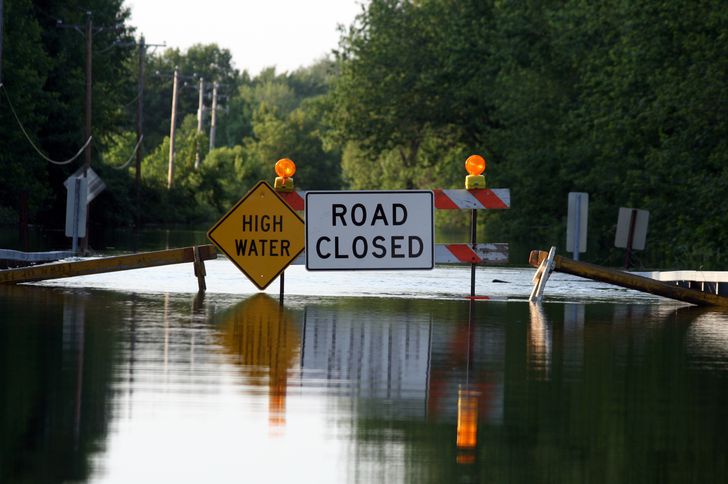
On New Year’s Eve 2022, the water that Californians had wished for finally arrived, but it wasn’t the blessing they’d hoped for. For three weeks, an onslaught of atmospheric rivers — plumes of tropical moisture — coming in from the Pacific Ocean battered much of the state with torrential rain and heavy snow. The runoff overflowed riverbanks and surged through towns, pulling down drought-stressed trees and dissolving parched mountainsides into avalanches of mud. The storms left at least 21 people dead — many of them carried away by flash flooding.
“Cycles of drought and rainfall are characteristic of California’s climate. But human-caused climate change has made these events more intense and severe,” says climate scientist Shradda Dhungel, of the Environmental Defense Fund. “Rising summer temperatures make the soil and vegetation drier, increasing the chance of drought and wildfires. Then in the winter, when California gets most of its precipitation, warmer air with massive amounts of moisture unleashes these big storms that are wetter and more intense. Because of these two sets of conditions, it’s possible to have more intense droughts and more intense storms and flooding.”
The link between extreme weather and climate change
An emerging body of research known as attribution science is focused on determining to what extent the growing intensity and frequency of severe weather can be directly attributed to climate change.
According to the Center for Climate Sciences at NASA’s Jet Propulsion Laboratory, with every 1.8 degF (1 degC) increase in sea surface temperatures, the number of extreme storms has risen by about 21%. If climate model projections hold true, extreme storms may increase 60% by century’s end.
Likewise, the blistering heat and persistent drought in recent years reflects the increase in temperatures brought on by the growing concentration of greenhouse gasses in the atmosphere. In southwestern North America, about 19% of the severe 2021 drought, and 42% of the extended drought in the 21st century, can be attributed to human-caused climate change, according to a study published in the journal Nature Climate Change.
When it rains, it pours
Just three months before the latest wild weather hit, researchers at the Climate and Global Dynamics Laboratory at the National Center for Atmospheric Research released a study warning that climate warming has already doubled the risk of a weeks-long extreme storm sequence capable of producing a California mega-flood.
“This is not something that is in the far tail of unlikely probability,” said co-author Daniel Swain, in a briefing about the findings. “This is something that is very plausible and very well could happen sooner, rather than later.”
With each one degC increase in temperature, the air holds 7% more moisture. So further warming “will increase that risk even more,” says Swain, “potentially resulting in a tripling or even quadrupling of that risk relative to what it would have been about a century ago.”
Does the flooding in California mean the drought is over?
The snowpack in California’s Sierra Nevada is crucial to the state’s water balance. Spring runoff tops up reservoirs and can be captured for drinking, irrigation and power generation. With higher temperatures, though, more precipitation falls as rain rather than snow, and the snowpack melts sooner and quicker.
“These storms are more of a relief than a reversal of the current, multi-year drought in California,” says EDF’s Dhungel. “Though most reservoirs are at historically average levels, the bigger ones are still at about 50% capacity. The snowpacks are twice what they were last year but unseasonably warmer temperatures in the spring and summer months could trigger an earlier thaw season and more rapid melting. And we don’t have a sense of what the next months will hold. If there’s a rapid increase in temperature, then the snowpack could melt too fast to replenish the aquifers.”
The growing toll of climate-driven extreme weather events
The damage from California’s recent storms is expected to exceed $1 billion. According to the National Oceanic and Atmospheric Administration, the U.S. experienced 18 billion-dollar climate and weather disasters in 2022, resulting in the loss of 474 lives. Last year marked the eighth consecutive year in which the country experienced 10 or more climate and weather events with losses exceeding $1 billion.
Dhungel and other experts say the state needs to better prepare for episodes of too much water, even as it strives to make do with too little. “The infrastructure we have in place is from the 20th century, built for the needs of 20 million people and fewer extreme cases of drought and deluge,” says Dhungel. “Now there are almost 40 million people and more intense extreme events, and the infrastructure hasn’t kept pace.”
California is planning to build its capacity to harvest storm water over the next several years, and the state has earmarked $54 billion to fight climate change, reduce pollution and support clean energy — although Gov. Gavin Newsom recently announced cuts to some climate change programs to help reduce a projected $22.5-billion budget deficit.
Other programs are aimed at reducing water use. The state awarded $40 million in grants to help landowners begin to transition up to 1 million acres of irrigated farmland to habitat for wildlife, recreational spaces and other uses that require less water. The grants are part of California’s new land repurposing program, which was modeled after EDF-sponsored legislation in the state. EDF will co-lead the implementation of the program.
Related:
- Atmospheric rivers, bomb cyclones and other weird weather phenomena, explained
- Reasons to be hopeful: Six stunning environmental wins in 2022
- Carbon capture: Reversing climate pollution
This article originally appeared on EDF.org and was syndicated by MediaFeed.org.
More from MediaFeed:
The 15 most expensive U.S. natural disasters since 1980

When a natural disaster comes our way, we can feel powerless to its effects. And those effects don’t just hurt our hometowns, but our pockets as well. With a record-breaking hurricane season expected this year, concerns about potential damages are in full swing.
The question is, how much do these individual disasters cost? Thanks to data from the NOAA National Centers for Environmental Information (NCEI), we can easily see just how expensive they can get. Using data from the NCEI, we’ve identified 15 of the costliest natural disasters to hit America since 1980.
NASA

Cost: $21.8 billion
Deaths: 35
When it hit: August 2004
States affected: Florida, North Carolina, and South Carolina
Details: Southwest Florida and the Carolinas were hit with a storm surge and powerful winds from this Category 4 hurricane.
FEMA

Cost: $24.4 billion
Deaths: 119
When it hit: September 2005
States affected: Landed in Louisiana and Texas, also affected Alabama, Arkansas, Florida, Mississippi, and Texas
Details: The coasts of Louisiana and Texas saw the entry of this Category 3 hurricane, while the storm surge and wind caused flooding in several other states in the South.
NOAA
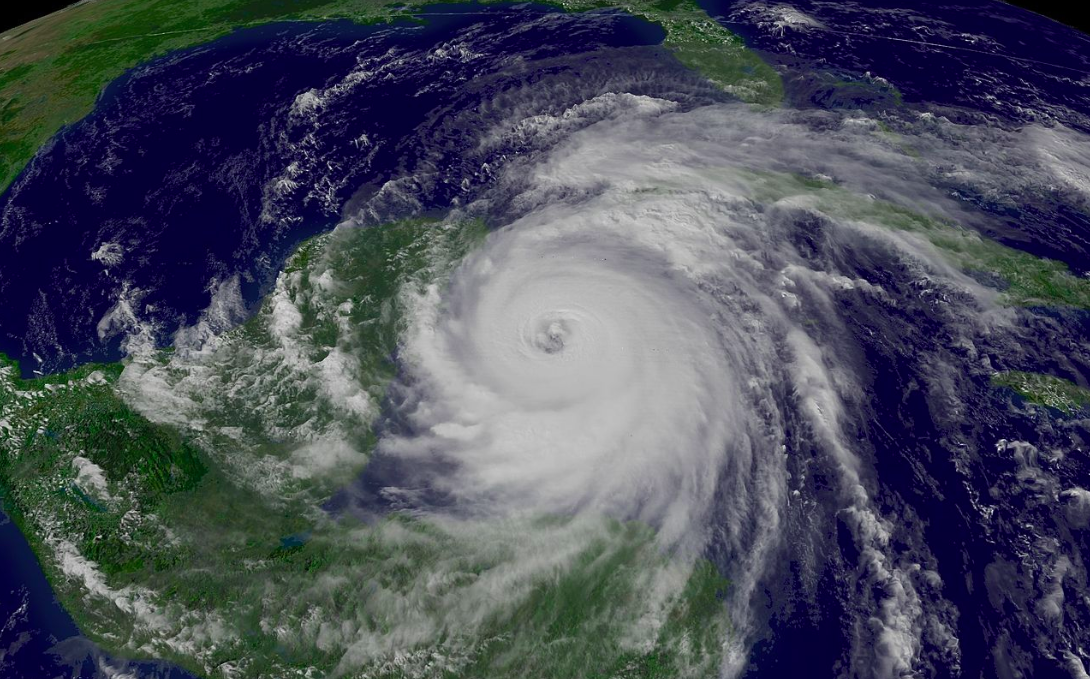
Cost: $25.1 billion
Deaths: 35
When it hit: October 2005
States affected: Florida
Details: Winds and flooding from this Category 3 hurricane mostly affected southeastern Florida.
NOAA
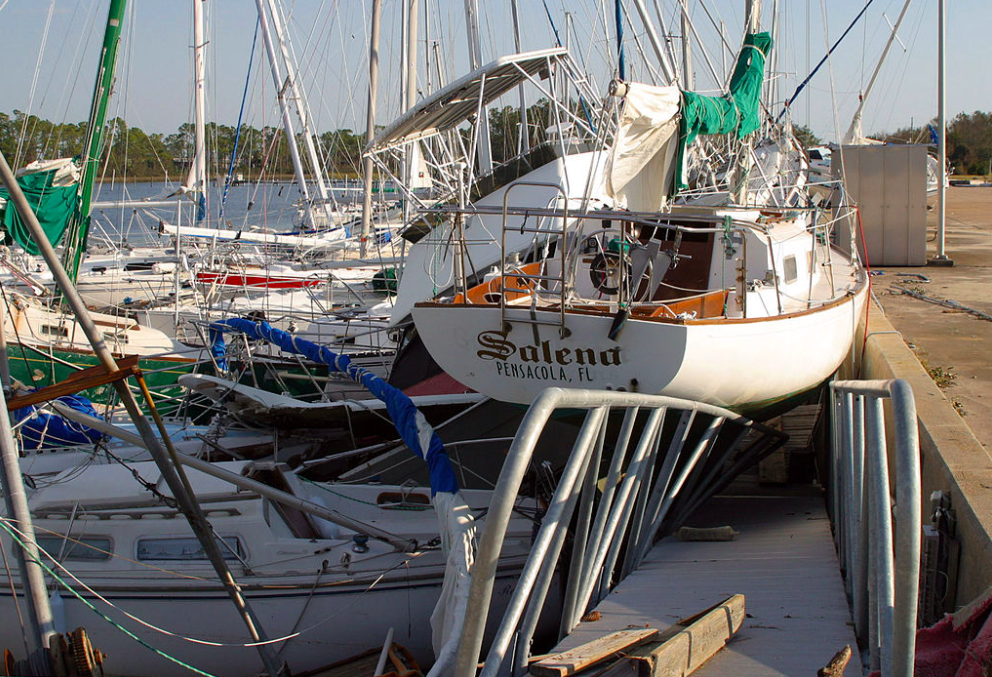
Cost: $27.9 billion
Deaths: 57
When it hit: September 2004
States affected: Landed in Alabama and also affected Delaware, Georgia, Kentucky, Louisiana, Maryland, Mississippi, New Jersey, New York, North Carolina, Ohio, Pennsylvania, South Carolina, Tennessee, Virginia, and West Virginia
Details: The gulf coast of Alabama bore the brunt of this Category 3 hurricane, whose wind and flooding also affected a great many other states along the East Coast.
Wiki Commons

Cost: $32.4 billion
Deaths: 1,260
When it hit: Summer through Fall of 1980
States affected: Central and Eastern United States
Details: The agriculture industry also took a hit from the drought of 1980, as did residents of the U.S. This drought directly and indirectly led to 10,000 deaths from heat stress.
DepositPhotos.com

Cost: $33.3 billion
Deaths: 123
When it hit: Much of 2012
States affected: Arizona, Arkansas, California, Colorado, Georgia, Idaho, Illinois, Indiana, Iowa, Kansas, Minnesota, Missouri, Montana, Nebraska, Nevada, New Mexico, North Dakota, Oklahoma, South Dakota, Texas, Utah, Wyoming
Details: According to NCEI, “the 2012 drought is the most extensive drought to affect the U.S. since the 1930s.” This drought, which affected more than half of the U.S. for more than half of the year, led to “harvest failure” for crops like corn, soybeans, and more.
DepositPhotos.com

Cost: $35.7 billion
Deaths: 112
When it hit: September 2008
States affected: Landed in Texas but also affected Arkansas, Illinois, Indiana, Kentucky, Louisiana, Michigan, Missouri, Ohio, Pennsylvania, and Tennessee
Details: This Category 2 hurricane led to “the largest (in size) Atlantic hurricane on record.” Besides the damage to homes and businesses, damage to oil platforms, gasoline storage tanks, and more led to shortages of gasoline along the southeastern states.
U.S. Army Corps of Engineers

Cost: $36.9 billion
Deaths: 48
When it hit: Summer of 1993
States affected: Illinois, Iowa, Kansas, Minnesota, Missouri, Nebraska, North Dakota, South Dakota, and Wisconsin
Details: Rain and thunderstorms in central U.S. in 1993 led to what the NCEI calls, “the most costly non-tropical, inland flood event to affect the United States on record.”
DepositPhotos.com

Cost: $43.4 billion
Deaths: 454
When it hit: Summer of 1988
States affected: According to Chicago’s WGN9, “At one point, 45 percent of the Lower 48 was in a state of extreme drought and 11 states declared all of their counties ‘disaster areas.’”
Details: The exact number of deaths from drought conditions in 1988 may have come in at 454, but it’s estimated that heat stress from the drought directly and indirectly took the lives of 5,000 people.
DepositPhotos.com

Cost: $49.1 billion
Deaths: 61
When it hit: August 1992
States affected: Florida, Louisiana
Details: Florida took the brunt of this Category 5 hurricane, as some 160,000 residents of Dade County alone lost their homes.
NOAA
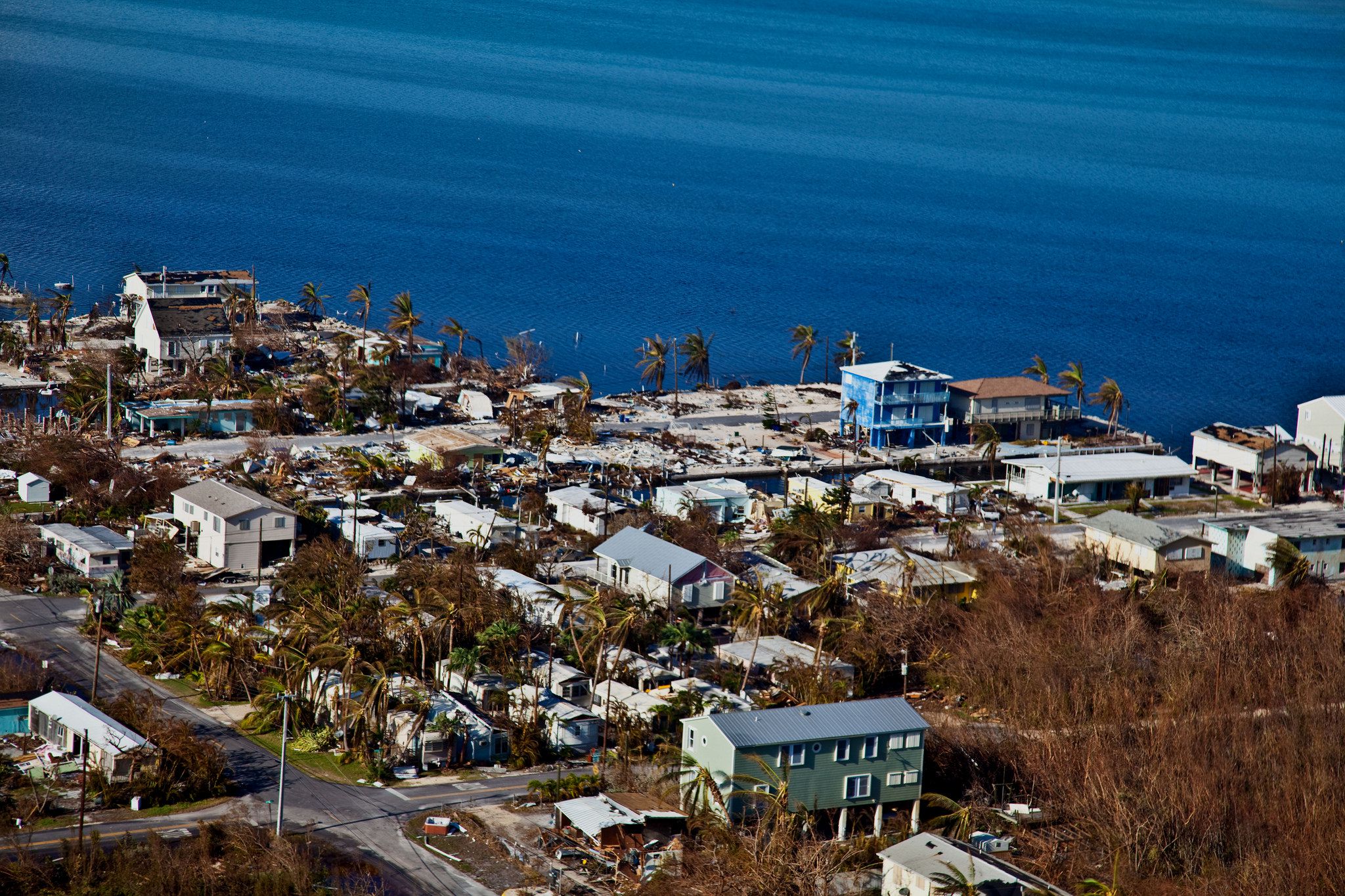
Cost: $51 billion
Deaths: 97
When it hit: September 2017
States affected: Florida, South Carolina and the islands of St. John, and St. Thomas
Details: According to NCEI, this Category 4 hurricane destroyed or damaged 90 percent of the buildings in the Florida keys after “devastating” U.S. Virgin Islands St. John and St. Thomas.
U.S. Customs and Border Protection

Cost: $72.2 billion
Deaths: 159
When it hit: October 2012
States affected: Connecticut, Delaware, Maine, Maryland, New Jersey, New York, North Carolina, New Hampshire, Ohio, Pennsylvania, Rhode Island, Virginia, and West Virginia
Details: This hurricane wasn’t just a hurricane, but it met with a Nor’Easter and was so severe that even the New York Stock Exchange had to close for two days — something that hasn’t happened since 1888.
NASA

Cost: $91.8 billion (and counting)
Deaths: 65
When it hit: September 2017
Areas affected: Mainly Puerto Rico, but also St. Croix
Details: Data on this Category 4 hurricane (including the deaths caused by it) is still being collected. Meanwhile, Puerto Rico has sustained so much damage that the standard of living has still not returned to normal.
U.S. Customs and Border Protection

Cost: $127.5 billion
Deaths: 89
When it hit: August 2017
States affected: Texas
Details: Seven days of rain met with flooding in this Category 4 hurricane that caused 30,000 people to become displaced and more than 200,000 homes and businesses to be damaged.
U.S. Customs and Border Protection

Cost: $165 billion
Deaths: 1,833
When it hit: August 2005
States Affected: Mainly Alabama, Louisiana, and Mississippi, but also Florida, Georgia, Indiana, Kentucky, Ohio, and Tennessee
Details: Known for broken levees, political fallout, and many in the city of New Orleans becoming homeless, Hurricane Katrina, which was a Category 3 hurricane, tops this list of most expensive natural disasters in America since 1980.
Afraid of what might happen to your personal finances if a disaster strikes your hometown? Read here to learn what happens to your credit after a natural disaster.
This article originally appeared on UpturnCredit.com and was syndicated by MediaFeed.org.
Larry W. Kachelhofer / Wiki Commons
Featured Image Credit: djperry / iStock.