
Should I save or pay off debt?
It’s a tough financial choice. Prioritizing debt repayment can help you pay off what you owe faster, eventually freeing up more money that you can save. It could also cut down on what you pay in interest charges. On the other hand, delaying savings could mean missing out on the power of compounding interest.
Whether it makes sense to pay off debt or save depends largely on the specifics of your financial situation, your needs, and your goals. The right decision might actually be to try to do both.
Related: What are credit card points?
What Are the Benefits of Paying Down My Debt?
Debt can wear you down mentally, emotionally, and financially. Collectively, Americans owed $15.84 trillion in household debt as of the first quarter of 2022, according to the Federal Reserve Bank of New York’s Center for Microeconomic Data. Whether you owe a credit card balance, student loans, personal loans, or a mortgage, here are some of the main advantages of choosing to pay off debt first:
- Paying off debt could save you money on interest charges, finance charges, and fees.
- As you reduce your credit utilization ratio (how much of your total credit limit you are tapping into), your credit scores might improve.
- Reducing debt can also reduce your mental or emotional burden if your financial obligations are a source of stress.
- Once your debt is gone, you can redirect those funds in your budget to saving or other financial goals.
Eliminating debt also means that you can lower your baseline cost of living. So instead of needing $5,000 a month to cover your expenses, you might be able to trim that to $4,000 instead, provided you can pay off a $1,000 monthly debt payment. Reducing monthly expenses can make it easier to get through a financial crisis or emergency should one come along.
When Might I Make Paying Down Debt a Priority?
If you’re debating whether to pay off debt or save, it’s helpful to think about your bigger financial picture and goals. For example, you might put debt repayment ahead of saving if you:
- Have been paying debts for a while and are tired of feeling like you’re not making any progress.
- Are able to qualify for a low APR personal loan or credit-card balance transfer that would allow you to pay off the debt faster.
- Mainly owe unsecured “bad” debts, such as credit cards or payday loans that are costing you significant money in interest.
- Are committed to sticking to your debt repayment strategy in order to clear your balances as quickly as possible.
That last point might be the most important. If you’re not all-in with your debt payoff plan, then you might not get much in return for your efforts.
How Can I Start Paying Down My Debt?
If you’re ready to pay down debt, the first step is knowing what you owe and to whom. You can start by making a list of your debts, including the creditor’s name, account balance, APR or interest rate, and monthly minimum payment, and how long it’s projected to take to pay down the debt.
Once you know what you owe, you can formulate a plan for paying it off. There are different strategies to become debt free that you can put to work.
Some of the most popular options include:
- Debt snowball. The debt snowball method involves ranking debts from lowest balance to highest and paying them off in that order. You pay as much as you can toward the smallest debt, while making minimum payments to everything else. Once that debt is paid off, you roll its payment over to the next debt on the list, continuing the process until all debts are gone.
- Debt avalanche. The debt avalanche (or highest interest rate) method ranks debts from highest APR to lowest. You’d then pay as much as you can toward your most expensive debt (the one with the highest interest rate), while making minimum payments to everything else. Once the first debt is paid off, you’d roll its payment over to the next debt on the list, continuing this process until all debts are gone. Recommended: How the Debt Avalanche Payoff Method Works
- Credit card balance transfer. Transferring balances to a credit card with a low or 0% APR can help you to save money on interest charges. Typically, these offers involve a window of no- or low-interest, after which point, you pay a typical variable APR. The goal is to catch up financially during that time period, or to whittle your debt down significantly since no interest is accruing. The most important thing to keep in mind is how long you have to pay off the balance transfer at the promotional rate before the higher APR kicks in.
- Debt consolidation. Debt consolidation means taking out a personal loan, home equity loan, or home equity line of credit (HELOC) to pay off other debts. You’d then make one payment toward the loan going forward. Whether this option saves you money can depend on the loan’s APR vs. the average APR you were paying across your other debts. If you can save a significant amount of money with a new rate versus your current rate, it may be worth the effort.
If you’re struggling to find the right debt repayment option, you might consider meeting with a nonprofit credit counselor or financial advisor. Guidance on financial planning for debt reduction can be very helpful, and organizations like the National Foundation for Credit Counseling (NFCC) can connect you with advisors.
Recommended: How the Debt Snowball Payoff Method Works
What Are the Benefits of Saving Money?
It pays to look at the other side of the issue when you are wondering, Is it better to save or pay off debt? Understanding the benefits of saving can help you to decide. Here are some of the main advantages of prioritizing saving:
- The sooner you begin saving, the longer you have to grow your money through the power of compounding interest.
- Having money in emergency savings can give you peace of mind if an unexpected expense comes along.
- Saving and investing in a tax-advantaged retirement plan can help you to build wealth for the long-term.
- You can save money for different goals at a pace that works for your budget.
Saving is crucial if you’d like to avoid racking up debt in an emergency. If your car breaks down or your dog needs surgery, for instance, you can use your emergency fund to pay those expenses rather than having to rely on a high-interest credit card.
When to Consider Saving Money Over Paying Down Debt
The decision to save vs. payoff debt also depends largely on your goals and what your financial situation looks like. You might prefer to save first and pay off debt second if you:
- Mainly owe “good” debts with low interest rates and don’t feel unduly burdened by them.
- Would like to build up an emergency fund before tackling your debt payoff plan.
- Could earn a higher interest rate on savings compared to the rate you’re paying on your debts.
- Are able to get “free” money by investing in an employer-sponsored retirement plan.
It’s important to note that there’s a difference between savings vs. investing. When you save money, you’re earmarking it for some future expense which might be planned (say, a down payment on a house) or unplanned (in the case of an emergency fund). You might put your money in a savings account, money market account, or certificate of deposit (CD) account where it can safely earn interest.
When you invest money, you’re putting it into the market. So you might buy stocks, mutual funds, or other investments. Investing money has the potential to deliver higher returns than saving it. But there’s a greater risk of losing money.
Potential Strategies to Start Saving Money
Making saving a regular habit can take time and effort. You may have to bypass little splurges (takeout food, for instance) as well as larger ones (joining pals on a vacation to Paris). But finding easy ways to save money can help you get into a routine of setting aside money. Here are a few ways you can do just that:
- Schedule automatic transfers. One of the simplest ways to save money is to transfer funds from checking to savings every payday. You can pick a set dollar amount to transfer. Then when you get paid, you’ll know that money is automatically going to savings. It won’t be sitting in your checking account, tempting you to spend it.
- Save at work. If you have a 401(k) or similar plan at work, that’s a built-in opportunity to save. You can defer part of your paychecks into the plan automatically, and your employer may chip in matching contributions, which is free money for you. If you get a raise each year, you can adjust your contribution rate by that same amount to funnel more money into retirement savings.
- Save “found” money. Found money is money that you weren’t planning on receiving. So that can include things like tax refunds, rebates, cash gifts you receive for birthdays or holidays, and other windfalls. Found money can give your savings a boost with minimal effort. Even if you don’t set aside the whole amount you receive, do try to stash part of it in savings.
- Use apps to save. Apps can make saving money easy. There are round-it-up apps that push purchases up to the nearest whole dollars and put the difference into savings. Or there are apps that pay you a percentage cash back on things like gas, groceries, and shopping. That’s money you can add to your savings pile.
If you’re struggling to find motivation to save money, try setting one or two small financial goals. For example, give yourself a goal of saving $1,000 to start your emergency fund in the next 60 days. Challenging yourself this way can help you get fired up about saving. If you’re able to knock out some smaller goals fairly quickly, it can get you solidly on the path to save more.
Can I Pay Down Debt and Save Money at the Same Time?
Whether you can pay down debt and save money at the same time will depend largely on your budget and how much you can dedicate to either goal. If you don’t have a firm budget in place, making one can help you see at a glance how much money you have to pay down debt or save.
So, say you make your monthly budget, and you have $1,000 left over after all your regular expenses are paid. Your current debt payments total $500 per month.
In that case, you might decide to keep paying $500 each month toward the debt and put $500 in savings. That way, you’re working toward both goals equally. If you’d like to prioritize paying off debt vs. saving, then you might pay $750 per month to debt and cut the amount you save down to $250.
Saving and paying off debt at the same time might be ideal if you can find the right balance between them. Again, it all comes down to whether paying off debt or saving takes first priority on your list of financial goals.
Does Starting an Emergency Fund Make Sense?
An emergency fund is designed to help you pay for unplanned expenses or unanticipated events. For example, getting laid off from your job could be a financial emergency if you don’t have any other income to fall back on. Other examples of financial emergencies include unexpected appliance repairs, vehicle repairs, vet bills, or medical bills.
Sixty-four percent of U.S. adults say they’d be able to handle a $400 emergency in cash, according to the Federal Reserve. But that means roughly a third of Americans would have to turn to debt to manage an unexpected expense. That’s a lot of people without a financial back-up plan. It may be wise to prepare and put some funds away in case a rainy day strikes.
Starting an emergency fund makes sense if you don’t want to be left scrambling to pay for unanticipated expenses. Even a small emergency fund of $1,000 could be enough to help you weather most minor emergencies. Once you save that amount, you could then work on building a larger emergency fund.
Of course, you may not need an emergency fund if you have substantial savings, investments, or other assets to draw on in a crisis. For most people, however, this is not the norm, so an emergency fund can still be an important part of their financial plan.
The Takeaway
Saving money and paying off debt can both be central to improving your financial situation. Whether you prioritize one over the other or tackle them both at the same time, it’s important to understand how saving and becoming debt-free can help you to get ahead and build wealth.
Learn More:
This article originally appeared on SoFi.com and was syndicated by MediaFeed.org.
SoFi Checking and Savings is offered through SoFi Bank, N.A. 2022 SoFi Bank, N.A. All rights reserved. Member FDIC. Equal Housing Lender.
SoFi members with direct deposit can earn up to 2.00% annual percentage yield (APY) interest on all account balances in their Checking and Savings accounts (including Vaults). Members without direct deposit will earn 1.00% APY on all account balances in Checking and Savings (including Vaults). Interest rates are variable and subject to change at any time. Rate of 2.00% APY is current as of 08/12/2022.
Financial Tips & Strategies: The tips provided on this website are of a general nature and do not take into account your specific objectives, financial situation, and needs. You should always consider their appropriateness given your own circumstances.
External Websites: The information and analysis provided through hyperlinks to third-party websites, while believed to be accurate, cannot be guaranteed by SoFi. Links are provided for informational purposes and should not be viewed as an endorsement.
More from MediaFeed:
Here’s what happens to your debt when you die
Do you know what will happen to your debt when you die? Some debts are forgiven while others may be passed down to heirs. Read on for the answers to some of the most frequently asked questions related to death and debt.
SPONSORED: Find a Qualified Financial Advisor
1. Finding a qualified financial advisor doesn’t have to be hard. SmartAsset’s free tool matches you with up to 3 fiduciary financial advisors in your area in 5 minutes.
2. Each advisor has been vetted by SmartAsset and is held to a fiduciary standard to act in your best interests. If you’re ready to be matched with local advisors that can help you achieve your financial goals, get started now.
panida wijitpanya / istockphoto

In order to accurately answer this question, we need to examine the most common types of debt people accumulate. In other words: Not all debt is equal. The type of debt you have and when you accumulated the debt will determine how and if your debt is passed on to others when you die.
The Most Common Types Of Debt
DepositPhotos.com

If you die with credit card debt, there are two things that may happen:
- Your debt may be forgiven and written off by the credit card company
- The debt will be passed on and the responsibility of a survivor
DepositPhotos.com

If you are the sole owner of the debt when you die, (not married or a cosigner) the credit card companies will be involved in the probate process. The money left in your estate, any retirement accounts, or other items worth money will be sold and the outstanding debts will be paid.
If there is not enough money in your estate to pay off the remaining credit card balance, your children or beneficiaries will not be required to pay the remaining balance. The outstanding debt will be “forgiven” by the credit card company.
Farknot_Architect / istockphoto

If the credit card is a joint account with a living spouse or a cosigner, the other account holder will be responsible for the debt. If you have authorized users on the account but they are not the account owner, the users will not be responsible for the debt.
bernardbodo / istockphoto
This is one of those myths that continues to live on. Credit card debt does not go away after seven years. The confusion with the seven-year time frame comes from the credit report time requirement.
After seven years, old debts begin to fall off of your credit report. Your debt, however, is still very much alive and owed. Lenders can and will continue to pursue the amount owed until it is paid, settled, or charged off. Do not be fooled into thinking your credit card debt will go away after seven years.
Farknot_Architect / istockphoto
The quick answer? It depends. There are several factors that determine if a deceased spouse’s credit card debt will be passed along to the surviving spouse. If the credit card debt was incurred before marriage and the deceased spouse was the sole owner of the account, in most cases, the debt will not be the responsibility of the surviving spouse.
If the credit card debt was incurred after marriage and the deceased spouse was the sole owner of the account, the state you live in determines the surviving spouse’s responsibility. If you live in one of these community property states and the debt was incurred after marriage, the surviving spouse is responsible for the credit card debt of their spouse regardless of the account ownership:
- Arizona
- California
- Idaho
- Louisiana
- Nevada
- New Mexico
- Texas
- Washington
- Wisconsin
If you do not live in one of these states, generally the surviving spouse will not be responsible for the credit card debt if they were not a joint owner of the account. If you are a joint owner on the account, you are now solely responsible for the debt.
DepositPhotos.com

Again, where you live determines what can happen to your medical bills when you die. Generally speaking, children and heirs will not be required to pay back the outstanding medical bills of their parents. With that being said, there are a couple of instances where a child could be responsible for the medical debt of their parents.
DepositPhotos.com

When a child cosigns admission paperwork acknowledging financial responsibility if the adult is unable to pay their bills, this debt may be passed down to the child.
gorodenkoff / istockphoto
There are 26 states that have filial responsibility laws that state a child may be responsible for a deceased parent’s medical debt in certain situations. The states that have filial responsibility laws are:
- Alaska
- Kentucky
- New Jersey
- Tennessee
- Arkansas
- Louisiana
- North Carolina
- Utah
- Indiana
- Nevada
- California
- Maryland
- North Dakota
- Vermont
- Connecticut
- Massachusetts
- Ohio
- Virginia
- Iowa
- New Hampshire
- Delaware
- Mississippi
- Oregon
- West Virginia
- Georgia
- Montana
- Pennsylvania
- South Dakota
- Rhode Island
Now, before you become overly concerned about living in one of these states, understand that the enforcement of filial responsibility laws is extremely rare. If you have significant medical debt, consult with an attorney in your state to see exactly what responsibility your adult children may be required to pay back.
Rawpixel / istockphoto

Student loan debt may or may not be passed on to survivors when the borrower dies. What happens to the loan depends on what type of loan was taken out and when it was established.
SPONSORED: Find a Qualified Financial Advisor
1. Finding a qualified financial advisor doesn’t have to be hard. SmartAsset’s free tool matches you with up to 3 fiduciary financial advisors in your area in 5 minutes.
2. Each advisor has been vetted by SmartAsset and is held to a fiduciary standard to act in your best interests. If you’re ready to be matched with local advisors that can help you achieve your financial goals, get started now.
Ta Nu/ istockphoto

If you have federal student loans, they will be forgiven upon death. Federal student loans do not pass on to others as long as a death certificate is presented to the lender. Federal student loans that fall into this category are:
- Direct Subsidized Loans
- Direct Consolidation Loans
- Direct Unsubsidized Loans
- Federal Perkins Loans
zimmytws / istockphoto

On Nov. 20, 2018, the Economic Growth, Regulatory Relief, and Consumer Protection Act was amended. The added section releases cosigners of a private student loan from financial responsibility if the primary borrower dies. Due to this, all new private student loans with cosigners are not required to repay the loan upon the student’s death.
However, student loans with cosigners taken out before Nov. 20, 2018, may still require the cosigner to be held responsible for the debt.
istockphoto
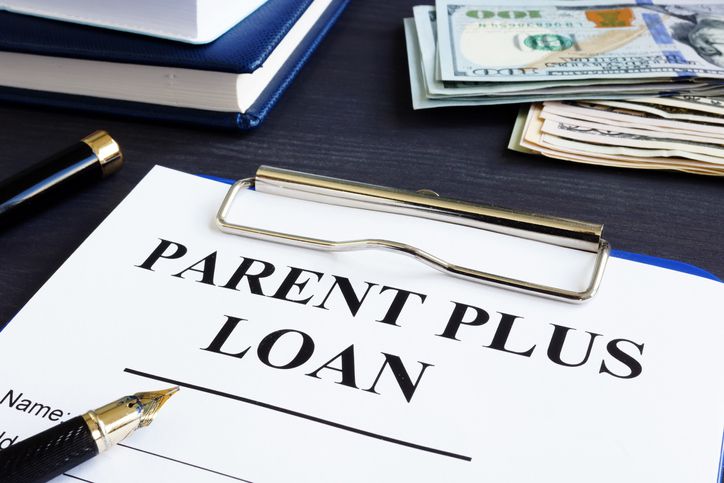
Federal Direct PLUS Loans are also forgiven upon the student’s death. In the past, the parent who signed for the PLUS loan was required to bear the burden of the tax responsibility and file the forgiveness as “income” after a child’s death.
Currently, The Tax Cuts and Jobs Act of 2017, is in effect and releases parents from this tax responsibility. This tax stipulation remains in effect until the year 2025.
designer491 / istockphoto

There is several different scenarios involving vehicle loan debt upon the borrower’s death. If the auto loan has a cosigner or the vehicle was purchased in a community property state after a couple was married, the cosigner or spouse is responsible to repay the auto loan.
If the loan was obtained before marriage and is only in the deceased spouse’s name, generally the surviving spouse is not held responsible for the debt. The bank will take possession of the vehicle to settle the outstanding debt or the surviving spouse can pay off the vehicle loan.
If the borrower is not married, the survivors can either pay off the vehicle loan and keep the vehicle, sell the vehicle and pay off the loan or return the vehicle to the bank. Heirs do not inherit vehicle loan debt.
DepositPhotos.com

Payday loan debt is very similar to credit card debt when you die. If there was not a cosigner or someone else listed as jointly responsible for the loan, then the company writes off the debt as a loss. Payday loan debt is not transferred to heirs but may be the responsibility of a surviving spouse if the debt was incurred after marriage in a community property state.
relif / istockphoto

In probate, the home must be paid off with the funds from the estate or the mortgage company must agree to let someone else inherit the loan. If you still owe money on your home, your spouse or heirs usually have three separate options:
Option 1: Sell the home to pay off the outstanding mortgage. The executor of the will can initiate a home sale to fulfill the outstanding debt obligations. If the home is not worth what is owed, additional money from the estate will be used to pay off the mortgage. If additional money is still required, the bank can take possession of the property.
Option 2: If there is enough money in your estate, your heirs can use that money to pay off the mortgage. Or the beneficiaries can use their own money to pay off the loan in full.
Option 3: If there is not enough money in the estate to pay off the loan, an heir may elect to contact the lender in an attempt to take over the loan. The loan would need to be transferred into the new borrower’s name which would require the heir to meet the credit obligations for a loan.
PRImageFactory / istockphoto

Lenders can force the sale of a property to fulfill the outstanding equity loan balance if the estate does not have enough capital to pay it off. This is another scenario where the heir may be able to apply with the lender to take over the payments.
Depositphotos

If you have federal tax debt when you die, the IRS gets the first chance at your estate. Legally, the executor of the state is unable to pay any other debt or obligation until the federal tax debt is settled.
If a substantial amount is owed, the IRS will quickly put a lien on any property owned by the deceased in an attempt to satisfy the debt. The federal government will get their money one way or another – but the heirs will not personally be liable for the outstanding tax debt.
supawat bursuk / istockphoto

There is not an automatic notification process when a person dies. The next of kin or executor of the state is required to contact the bank and provide a copy of the descendant’s death certificate.
When the death certificate is presented, the financial institution will freeze all of the associated accounts until the probate process is completed. If money is not owed to other lenders, the beneficiaries will be given access to any monies left in the deceased person’s accounts.
marchmeena29 / istockphoto

Even though most debts will not be passed on to your heirs when you die, you may not want them to deal with the hassle of paying off all your debt with your estate – only to be left with nothing.
If you have struggled with debt your entire life, a cheap term life insurance policy may be an option to leave a small inheritance to your heirs. Most life insurance policies are dispersed tax-free and are not accessible to creditors.
sturti

Leaving debt behind is a fear many seniors face. On the bright side, your heirs will usually not be personally responsible for paying off your outstanding debts. However, the sooner you can clean up your own financial mess, the better.
Do your best to start paying off your debt so your executor is not faced with a long probate process. If you need help getting started, check out this related post The Debt Payoff Playbook.
This article originally appeared on Arrest Your Debt and was syndicated by MediaFeed.org.
Deposit Photos
tumsasedgars/istock
Featured Image Credit: istockphoto.