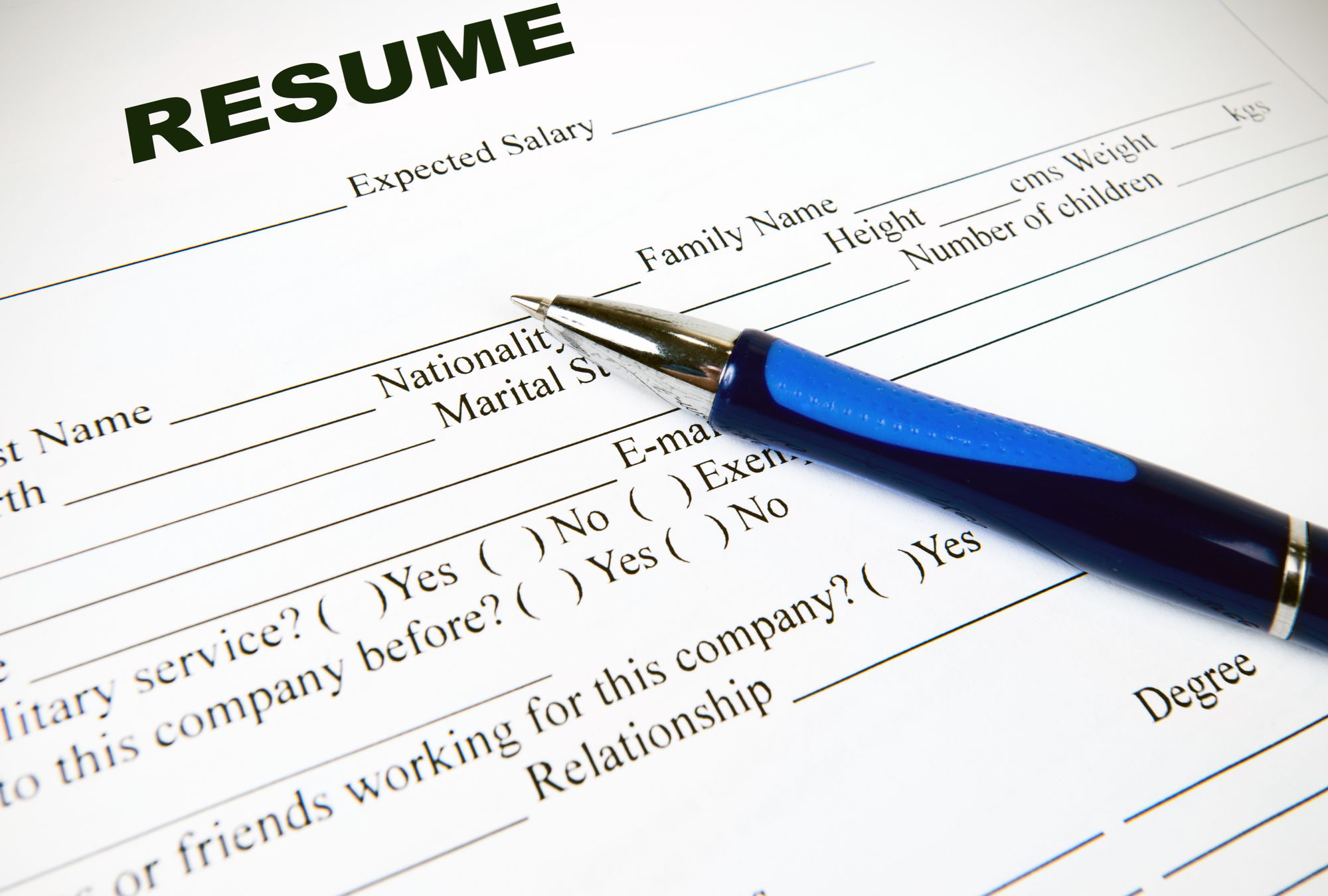
Trying to determine the appropriate length for your resume can be difficult, especially with all the conflicting information that shows up in search results. You may have heard a resume should never be more than a single page, but that doesn’t apply to everyone.
For most people, one page is all that is necessary. However, circumstances regarding years of work experience and type of work greatly impact the length of your resume.
When Your Resume Should Be One Page
“The length of your resume should be equivalent to your experience,” says Jen Heller Meservey, owner of a resume writing company. “An entry-level resume shouldn’t be more than one page. If it is, you should review your content and trim it down.”
Therefore, if you are still in school or newly graduated, your resume should be strictly one page. At this point in your career, you do not have enough experience to constitute taking up any more than a single page.
As a general rule, if you have less than 10 years of professional experience, keep your resume to one page. Because recruiters typically do not spend a lot of time reviewing a single resume, they might miss highlights or skip over portions of a multi-page resume.
When Your Resume Should Be Two Pages
However, if you have more than 10 years of professional experience, a two-page resume may be more appropriate, especially if you are applying to a mid-range position or higher.
According to a recent study conducted by ResumeGo, “Recruiters were 2.3 times as likely to prefer two-page resumes over one-page resumes.” When looking closer, the more advanced the position, the more likely recruiters preferred two-page resumes.
However, do not try to get two pages out of your resume if you genuinely only have the experience for a singular page. It could signal to the recruiter that you do not have enough experience or good communication skills.
When Your Resume Should Be Longer Than Two Pages
CareerBuilder asked hiring managers and human resources professions about the most common mistakes made on resumes. Almost 20 percent identified “resumes that are more than two pages long” as the most common mistake.
Unless specified in the job posting, your resume should never be more than two pages. If it is, you are adding unnecessary information to your resume. Struggling to keep your resume under two pages? Check out some guidelines below.
How to Keep Your Resume Length Ideal
Remember you only want to include experiences that are relevant to the job you are applying for. “Take out anything that isn’t relevant to the job for which you’re applying, but make sure you don’t leave any gaps in your work history,” says Meservey.
Meservey explained taking out filler words and making your bullet points direct will help shorten your resume. Remove any long-winded phrases and replace them with simplistic descriptions of your accomplishments.
If all else fails, you can target the physical structure of your resume. Customize your page margins, font, and text size to keep your text on one or two pages. Meservey recommends not going smaller than .25” on your margins or smaller than 10-point with your font.
General Guidelines
- Resumes should never have half-pages: Keep your resume to one full page or two full pages. Anything in between will appear unprofessional.
- Struggling to fill a full page: If you are struggling to fill two pages, your resume should not be that long. It is easier to cut down a resume than try to add information that may not be necessary for the hiring manager.
- Utilize your white space: When ensuring your resume is the ideal length, you want to examine how you are using white space. Adding too much to hit another full page will give off an unprofessional look, but not using enough will make everything run together. Consistency is key, make sure your white space is working in your favor.
This article originally appeared on TheForage.com and was syndicated by MediaFeed.org.
More from MediaFeed:
Resume gaffes to avoid if you’re over 50

When was the last time you overhauled your resume? As an older, more experienced job hunter, it’s not enough to simply change a few dates and descriptions when you start looking for a new position. The resume style and design that got you in the door years ago can make you look downright prehistoric now.
It’s tough enough out there already: Unemployed job hunters age 55 to 64 spend a median of 34.5 weeks looking for work, vs 22.2 weeks for workers of all ages, the Bureau of Labor Statistics reports.
And in a recent AARP survey of workers 45 and older, three-quarters cited age discrimination as a reason they weren’t confident they could find a new job in short order.
To make sure you don’t look like a dinosaur in your field, don’t make these eight mistakes on your resume.
Dragana991 / iStock

An old fashioned, black-and-white resume won’t cut it anymore, says Louise Kursmark, executive resume writer and co-author of Modernize Your Resume.
Christopher Ward, co-founder at Myer Resumes, agrees: “Society is becoming more visual.”
To give your resume a modern look, add a splash of color to the section headings or incorporate a colorful personal logo. Instead of using Times New Roman, pick a contemporary font like Calibri, Cambria, Palatino, or Verdana—all of which are standard typefaces, so they’ll translate just fine between operating systems.
But stick to one font. Also, leave some white space on the page to make your resume easier to read, suggests Kursmark.
Andrey Shevchuk / iStock

Your resume is a way to sell yourself to employers, not your complete biography. “Recounting unrelated experience from the distant past is a surefire way to make your resume seem dated,” says Scott Vedder, a Fortune 100 recruiter and author of Signs of a Great Resume. “There’s no law of resumes that says you must include every job you’ve ever had.
As a general guideline, only highlight jobs from the past 10 to 15 years. The caveat? “Include a quick nod to a job from long ago when it relates to the opportunity you’re pursuing,” says Vedder.
For example, skip your fast food job in college, but, he adds, “an application for an HR role at a major food and beverage outlet may be well-served by referencing prior experience in the field.”
This culling will also help you keep your resume to no more than two pages, Ward’s recommended max (one page is even better).
Pixabay.com

Employers are looking for professionals who keep their skills fresh. “Stating you’re proficient on software or a program that is no longer commonly used probably isn’t relevant in today’s market,” says Vedder.
The same applies to soft skills, such as “leadership” or “problem solver.” Employers should be able to glean that you possess them from your work experience.
And don’t list obvious skills or software, like Microsoft Word.
Use the skills section of your resume to highlight proficiencies that show you’re current with industry trends. So, for example, if you’re in sales, you’d want to include Salesforce or other up-to-date software on your resume.
Not sure what’s in demand today? Scour job listings for the skills employers are singling out.
Pixabay.com

“It’s ridiculous to think something as innocuous as aol.com at the top of the resume will knock you out of the running, without a further consideration, but there is a chance that it might,” says Dawn Bugni, a professional resume writer in Atkinson, N.C. “Is it fair? No. Does it happen? Yes.”
Instead of using your hotmail or AOL address from the ’90s, upgrade to a Gmail account.
Pixabay.com

Hyperlinking your email address will make it easier for hiring managers to contact you for an interview.
Plus, include a link to your LinkedIn profile and any other social media accounts that you use professionally (read: not your personal Facebook page). That’ll save a prospective employer from having to search for you online.
Pro tip: Create a customized LinkedIn URL to reduce clutter on the page, Ward recommends. (Go to your profile page, then follow directions under “Edit public profile & URL.”)
If you’re in a creative field, such as graphic design, link directly to your online portfolio or work samples.
Pixabay.com
Still sporting an objective at the top of your resume? Get rid of it, says Bugni.
Rather than leading with what you’re looking for in a job, focus on your prospective employer’s needs by writing a career summary instead. This section should explain, briefly (think roughly 50 words), what skills and experience you bring to the table, and how you’ll add value to the company.
It should also have a headline describing your profession and level of experience.
DepositPhotos.com

Although the Age Discrimination in Employment Act prohibits employment discrimination against persons 40 years or older, plenty of 50-plus workers sense that it can be a problem.
Many job seekers make the mistake of revealing their age by including their college graduation date on their resume, says Ward. The best approach is to simply leave it off.
That may not solve the problem, of course. In AARP’s survey, 44% of respondents who had applied for a new job in the past two years reported being asked their age or graduation year.
For tips on how to answer that and other ageist job interview questions, check out this story.
dragana991 / istockphoto

Including the phrase “references available upon request”on a resume used to be commonplace. Not today. Potential employers expect you to be able to provide references. You don’t need to waste space on your resume saying so.
This article originally appeared on Considerable.com and was syndicated by MediaFeed.org.
Pixabay.com
Featured Image Credit: istockphoto/undefined undefined.