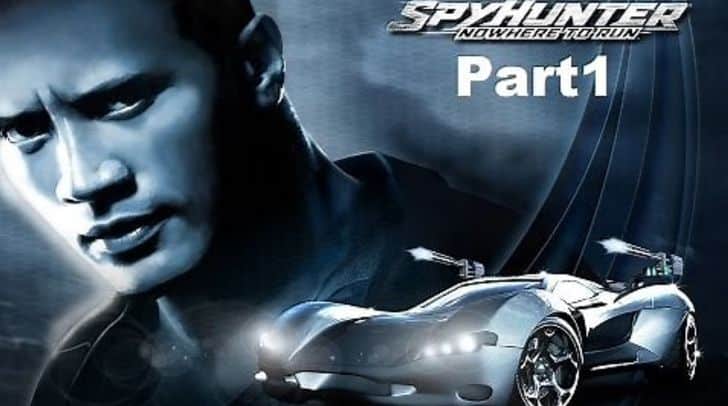
Spy Hunter originally got its start in the ’80s as a fast-paced, top-down racing/action game, where you drove in a souped-up, spy-killing sportscar, using every weapon you could get your hands on to subdue evil forces and make your way to the cherished Weapons Van. To this day, it’s still a classic, though the series took an interesting turn in evolution since then.
After seeing the arcade sequel Spy Hunter II (with dual screens for two-player play!) and a Spy Hunter pinball machine, the series went dormant for a little while, though it did manage to re-emerge for a short while with the NES release Super Spy Hunter, which fares pretty well.
But then, Midway brought the franchise roaring back on the PlayStation 2, Xbox and GameCube with Spy Hunter, a thrilling 3D remake featuring splendid visuals, clever use of weaponry and sharp controls. Since then, it didn’t quite get back to those lofty heights, although Spy Hunter II was a pretty good follow-up.
However, Midway went for the gold when it decided to release the latest entry in the series in 2006 – Spy Hunter: Nowhere To Run. That’s because, for this particular release, it decided to do as much in the car as it would outside of it, as the main character, Alex Decker, would be played by none other than Dwayne “The Rock” Johnson.
Yes, the former wrestling superstar-turned-actor did appear in a video game around the same time that he tried to make Doom a reputable flick. It was an interesting choice of casting, especially for a game series that established itself on racing first and not really doing much outside of the car.
The game puts Decker, an agent of the International Espionage Service against the NOSTRA agency using a specialized Interceptor sports car to get the job done. But they get separated when a mission goes wrong, and Alex finds himself fending off against enemy forces in the hopes of stopping them once and for all – and keeping his crew safe.
So, yeah, typical spy plot, which usually ties in with the Spy Hunter logic anyway. And it’s the Rock, whose charisma has carried films like Fast Five, The Scorpion King and even San Andreas, so what could go wrong, right?
Well, the thing is, once you fiddle with a familiar formula, something’s likely to go wrong. When Nowhere To Run was released, it was met with average scores and general criticism. While some folks were pleased with the visuals and in-game acting (yes, the Rock could definitely carry a role back then, despite what Doom ended up doing), others weren’t too fond with the addition of on-foot/action elements, as well as the lack of improvements from other games in the series. Even with some of Dwayne’s trademark wrestling moves (as takedowns), it just never came together as planned. “The first PS2 Spy Hunter is a much better game,” PSM noted – and it’s not far off.
That’s because the original game, again, focused on what made the original arcade classic work – the core driving mechanics and avoiding traps set by enemies, even if that meant blowing them off the face of the map. Nowhere To Run has these vehicular elements as well, to be sure, but it stalled when it came to the other parts of the game. Not to mention the fact that a lame cliffhanger ending left a lot of gamers feeling like, “Uh, that’s it?!”
Still, the effects from Nowhere To Run were interesting in parallel. The Rock, obviously, would go on to a much bigger film career, while Midway Games would end up filing for bankruptcy just three years after the game’s release, with Warner Bros. picking up a majority of its franchises, including Spy Hunter (which it would later release as a 3DS/PS Vita portable game, with mixed results) and Mortal Kombat. Granted, Midway also bet big on other franchises that didn’t pay off, including Psi-Ops, The Suffering, Blitz the League (and its dreaded sequel) and others.
But Nowhere To Run was an interesting project for its time, an attempt to integrate a top star into a franchise to see what could come of it. It may not be the most successful project the studio has seen – far from it – but it was still noteworthy to fans of the wrestler/superstar and had a decent amount of action despite its setbacks.
On top of that, it’s kind of weird how things come full circle, as The Rock will soon be appearing in a film based on the video game Rampage, a classic property from the Midway line-up. Think he’ll deliver a Rock Bottom to Ralph…?
This article originally appeared on Gamerterra.com and was syndicated by MediaFeed.org.
More from MediaFeed:
Only Boomers & Gen-X will remember these Saturday morning shows
Once upon a time, Saturday mornings were for more than just sleeping in. The ’70s were filled with classic programs like Wonder Woman, The Brady Bunch and M*A*S*H that aired during prime time, but what about those Saturday morning shows?
Saturday morning cartoons were a rite of passage for children starting in the mid-1960s up until their unofficial end in the 1990s. During the 1970s, some of the best cartoons aired during this time slot and they remain as some of the most beloved and often watched shows today.
Before streaming platforms made it irrelevant to know what time your favorite show was airing, people dedicated time out of their weekend plans to settle around the TV and watch their favorite shows. Do you remember tuning into these classic Saturday morning shows in the 1970s?
DepositPhotos.com

The Tom and Jerry Show aired in 1975 as part of The Tom and Jerry/Grape Ape/Mumbly Show. The show, which was created by Hanna-Barbera Productions, began as a theatrical cartoon series that ran before movies in theaters.
ABC’s ban on violence meant the series lacked the slapstick violence that people had become used to in the theatrical shorts. It only ran for 16 episodes in its first iteration but remains one of the most beloved cartoons from the era.
MGM Television / IMDB

In the 1960s, The Action for Children’s Television began boycotting the gratuitous violence that they perceived to be in the cartoons of the era. Because of this, Hanna-Barbera quickly developed a new series that lacked the “excessive violence” that led to a number of cancellations in 1969. This led to the birth of Mystery, INC.
Scooby-Doo, Where Are You! first premiered on CBS in 1969 and the series ran until 1976 on the network. That year, the series was moved to ABC where it ran until 1991. The franchise spawned a number of subsequent revivals, spin-offs, crossover episodes, and live-action and animated movies.
Hanna Barbera Productions / IMBD

The “Golden Age of Cartoons” didn’t just stop when the 1960s ended; they lived on in syndication on Saturday morning. One of these common reruns that could be found on TV was The Sylvester & Tweety Show, which aired every Saturday morning on CBS. Sylvester has been around since 1939, while Tweety first arrived on screen in 1941. Their legacy continues today with The Looney Tunes.
Warner Bros. Entertainment / Amazon

The Bugs Bunny Show is another series that made the jump between networks in the middle of its run. It originally aired on ABC in 1960 and remained there until 1973 when it switched to CBS.
In its early days, it was actually a prime-time cartoon that aired on Tuesday nights, but in 1962 it began running Saturday mornings, where it remained until the ’80s. The original 52 episodes of the series aired in black-and-white.
ABC / IMDB

Woody Woodpecker is yet another member of The Looney Tunes. Woody first appeared in “Knock Knock” in 1940 and went through several iterations before he became the Wood we’re all familiar with. His own series, The Woody Woodpecker Show, aired during the Saturday morning cartoon lineup.
Interestingly enough, Woody has a star on the Hollywood Walk of Fame.
Universal Television/ABC / IMDB

The Pink Panther Show aired on Saturday mornings on two different networks during the ’70s: – NBC from 1969 to 1978, and ABC from 1978 to 1980. When it moved to ABC, it was re-titled as The All New Pink Panther Show and Pink Panther Encore, where it lasted only two seasons after nine years on NBC.
NBC / IMDB
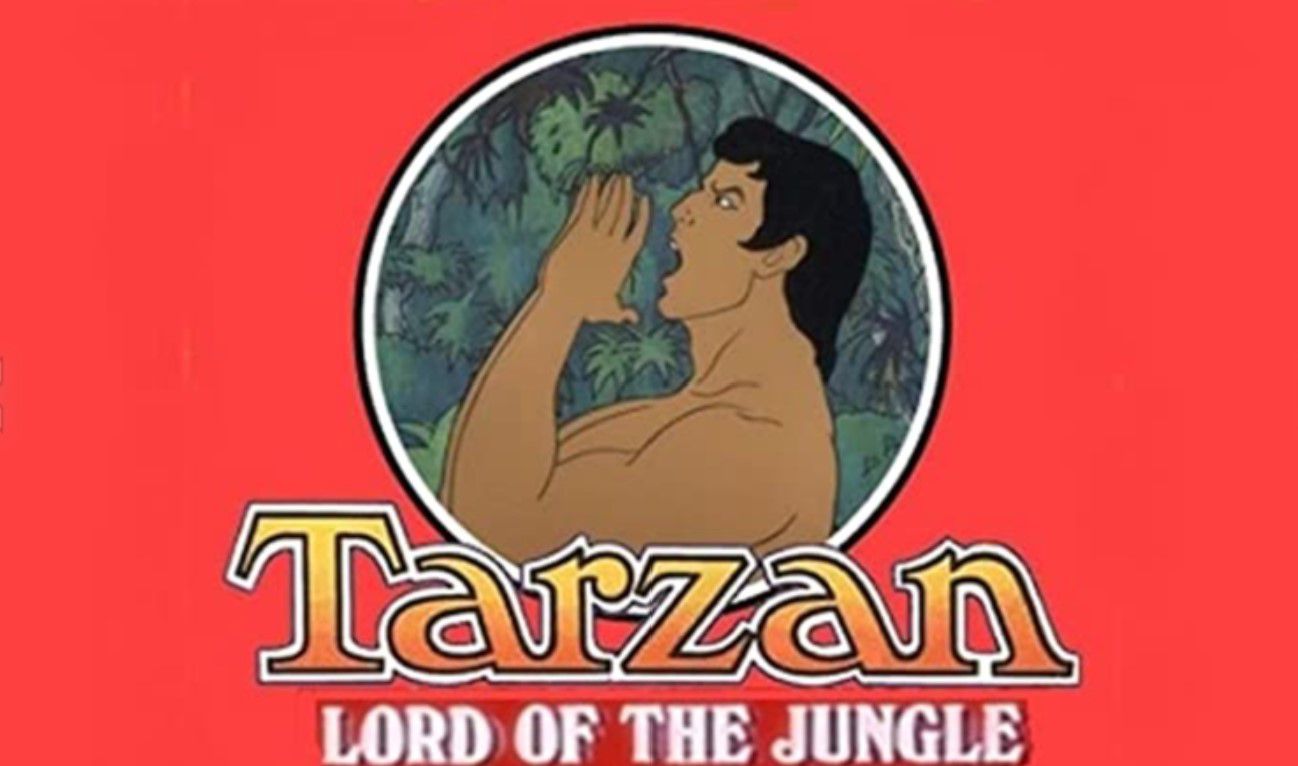
Tarzan, Lord of the Jungle was an animated adaptation of the classic novel by the same name and it was the first animated version of the story, predating Disney’s Tarzan film by two decades. Robert Ridgely voiced Tarzan, who was a far more well-spoken version of the character. In this cartoon, Tarzan’s sidekick was a monkey named N’kima.
From 1977 to 1978, CBS aired The New Adventures of Batman and Tarzan, Lord of the Jungle during the same hour, creating “The Batman/Tarzan Adventure Hour.”
CBS / IMDB
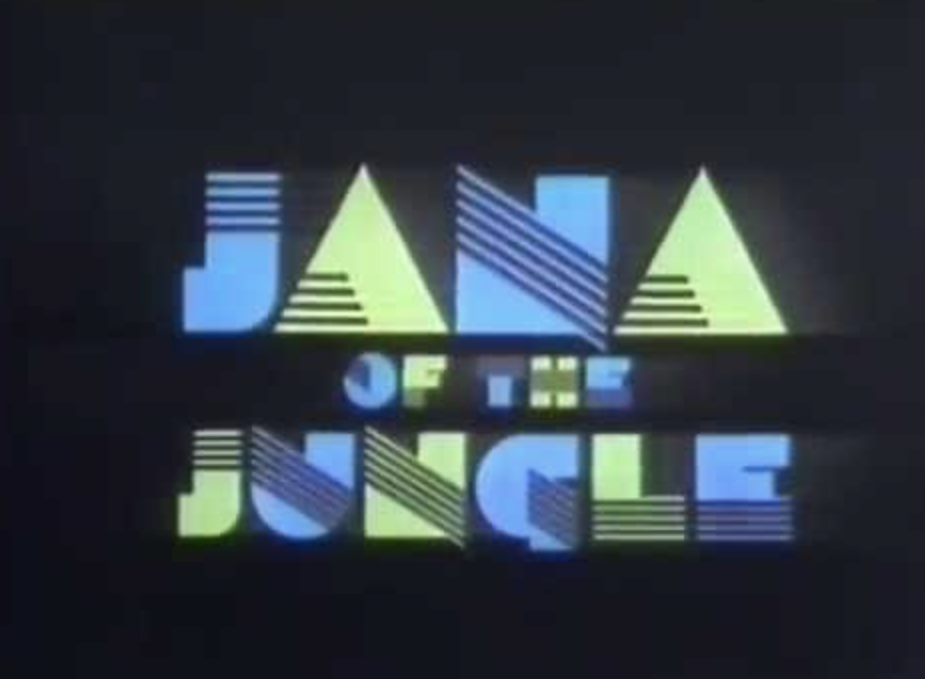
Jana was essentially the female version of Tarzan and had been abandoned in the rain forests of South America after a boating accident where she was separated from her father as a child. Like Tarzan, her sidekicks in the series are animals, including Ghost the white jaguar, Croco the crocodile and Tico the water opossum. Jana’s weapon of choice bore a striking resemblance to the chakram that would later be used in Xena: Warrior Princess. Jana of the Jungle was part of “The Godzilla Power Hour” on NBC from 1978 to 1979.
There were a lot of popular live-action series that ran during the week and during the 1970s, networks had the ingenious idea to blend together their live-action series and their weekend cartoons, which resulted in the advent of “Filmation” and animated spin-offs. Most of these series were created by Hanna-Barbera Productions.
Hanna Barbera Productions/NBC / IMBD
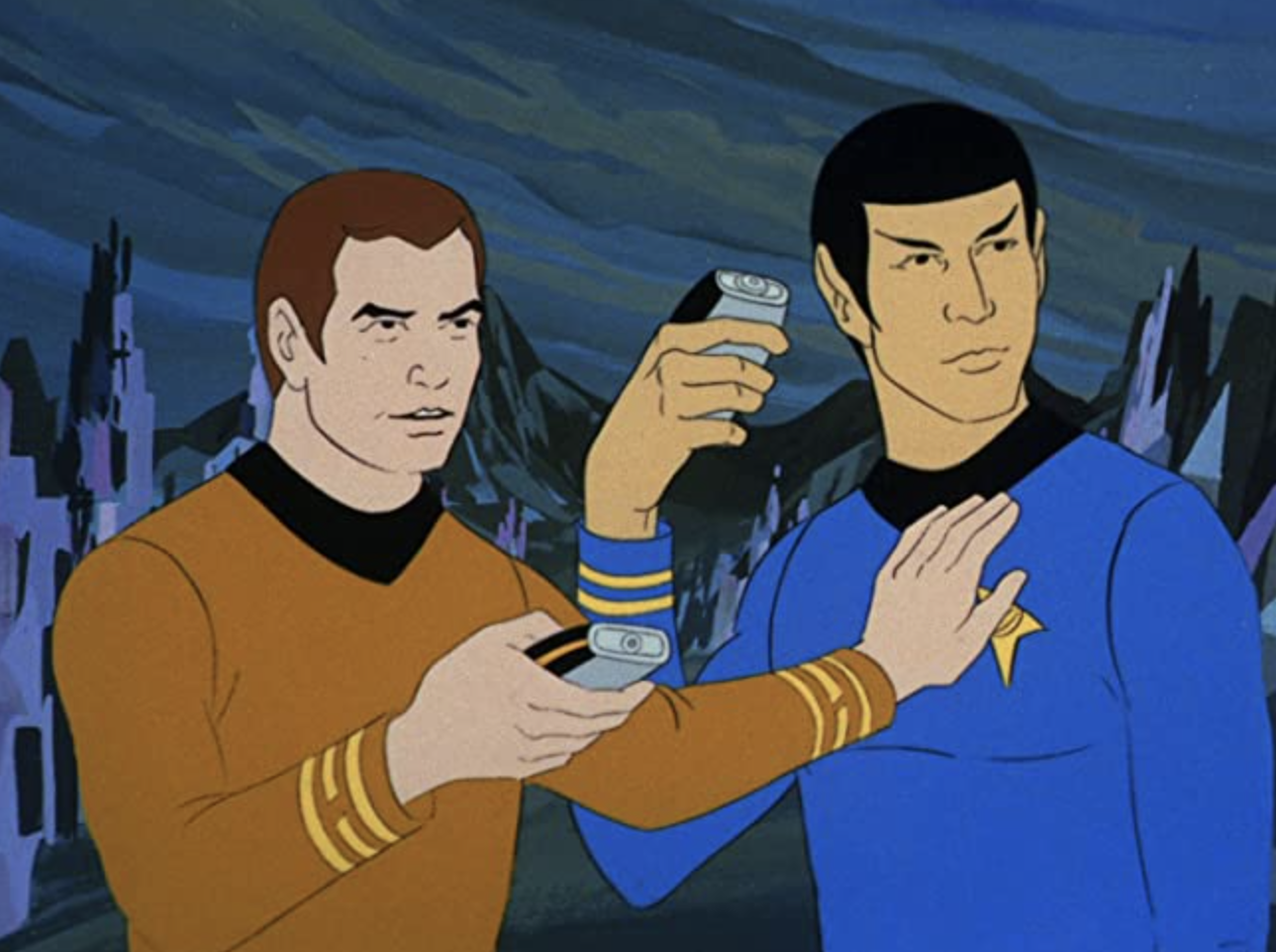
Star Trek: The Animated Series was an animated spin-off based on Gene Roddenberry’s that was launched after Star Trek’s cancellation in 1969. The production was able to bring in most of the original cast to voice their characters, except for Walter Koenig who played Chekov. Initially, Nimoy refused to voice Spock unless they brought on Nichelle Nichols and George Takei to voice Uhura and Sulu, respectively.
The series served as the fourth season of Star Trek before the storylines were revisited in Star Trek: The Motion Picture.
Paramount Home Entertainment / IMDB

Lassie’s Rescue Rangers aired from 1973 to 1975 on ABC, and its hour-long pilot “Lassie and the Spirit of Thunder Mountain” is a part of the “ABC Saturday Superstar Movie.”
In the series, the beloved collie Lassie lives near Thunder Mountain with Ranger Ben Turner and his family. Ranger Turner works at Thunder Mountain National Park where Lassie is the leader of the Rescue Rangers, a group of wild animals that work alongside the Turners to help protect the park and its visitors.
ABC / IMDB

Pierre Boulle’s novel Planet of the Apes was adapted into a Saturday morning cartoon series for 20th Century Fox Television. It ran for only a season from 1975 to 1976. It aired during the same era that Boulle’s novel was adapted into a comic book series by Marvel Comics from 1974 to 1977.
Return to the Planet of the Apes differed from its live-action adaptations, featuring a completely advanced society with automobiles, films and technological advancements, which bore more of a resemblance to Boulle’s original novels, where the apes were far more advanced.
20th Century Fox / IMDB

At the start of the fourth season of The Brady Bunch showrunner Sherwood Schwartz reached out to Filmation to create an animated spin-off for the series. The Brady Kids only ran for two seasons on ABC and was fraught with drama, including a near-lawsuit when the children declined to return to voice more episodes during the second season.
Barry Williams and Maureen McCormick, who voice Greg and Marcia Brady, did not return for the second season of The Brady Kids and were replaced by the children of one of the producers.
ABC / IMDB

It should come as no surprise that The Partridge Family had an animated spin-off of their own. The science fiction mash-up Partridge Family 2200 A.D. was produced by Hanna-Barbera Productions and aired Saturday mornings on CBS.
Danny Bonaduce, Suzanne Crough and Brian Forster voiced their own characters, while Susan Dey, David Cassidy, Shirley Jones and Dave Madden’s characters were replaced by other voice actors.
The series centered around the Patridge Family living in space, just like the Jetsons. It was never explained how or why the family was living in 2200 A.D. Up until this point, the Partridge Family had been recurring characters on Goober and the Ghost Chasers, though the series were unconnected.
Hanna Barbera Productions/CBS / IMDB

The New Adventures of Gilligan was an animated spin-off based on CBS’s hit series Gilligan’s Island. Most of the original cast returned to voice their characters, except for Tina Louise and Dawn Wells. The story basically followed that of the original series, with some key differences, including Stubby, the anthropomorphic monkey.
The cartoon ran for two seasons from 1974 to 1975, and even received a sequel, Gilligan’s Planet, in the 1980s. The New Adventures of Gilligan did not receive the rights to The Ballad of Gilligan’s Isle, so it lacked the iconic theme song from the live-action.
ABC / IMDB

In the ’70s, live-action series were not just reserved for prime-time entertainment and Saturdays weren’t just for cartoons. You may think there are a lot of DC Comics on television today, but back in the 1970s, there were three DC Comics series listed in TV Guides everywhere, two of which aired on Saturday mornings.
Shazam! was a half-hour, live-action series that aired Saturday mornings on CBS. The series centered around the superhero Shazam (aka Captain Marvel), played by Jackson Bostwick and later by John Davey. The intriguing part of the character is that when he’s not a superhero, he’s a teenage boy named Billy Batson, who was played by Michael Gray.
The series ran for three seasons and after its first season, it aired during the same hour as The Secrets of Isis, creating what was known as “The Shazam!/Isis Hour.”
CBS / IMDB

The Secrets of Isis was the companion series to Shazam!, and because of this, the two characters appeared in both series. Isis was portrayed by Joanna Cameron. In this series, Isis is the superhero-style alter-ego to the schoolteacher Andrea Thomas. She can transform into an Egyptian goddess when presented with crises that no mere mortal could resolve. The character was later adopted into modern DC comics.
One of the most memorable parts of the series was the way that Isis would often “break the fourth wall” and speak directly to the audience.
There were a lot of other live-action series that aired on Saturday mornings as well.
NBC Universal / IMDB

While Monster Squad only lasted for one, 13-episode season, plenty of people tuned in on Saturday mornings because of Fred Grandy, who had starred in Love Boat. Grundy played Walt, a criminology student who worked nights at a wax museum. One night, the computer he created caused all of the wax figures to come to life.
Think Night at the Museum, but if Dracula, the Wolfman and Frankenstein’s monster decided to become superhero crime fighters.
NBC / IMDB

The live-action series Jason of Star Command was actually inspired by another popular live-action series from the time, Space Academy. The series aired on CBS and was designed a little bit differently from TV series today.
The first season was written as 16 chapters that were only 15-minute episodes and styled like movie serials that told one overarching story. The second season was a stand-alone comprised of half-hour episodes.
NBCUniversal / IMDB

Space Academy was set in the year 3732 on an asteroid that housed the Space Academy. Academy brought together the best young minds of the time to explore the mysteries of space. Jonathan Harris starred as Commander Isaac Gampu, the head of the Space Academy. Harris was best known as Dr. Zachary Smith from the popular sci-fi series Lost in Space.
Space Academy only had 15 episodes, but reruns kept it alive in the minds of Saturday morning viewers.
CBS / IMDB

Ark II was another short-lived, live-action series that aired on Saturday mornings. Also set in the future, the series was set in the 25th century following the fall of civilization. The series was loosely based on the story of Noah’s Ark, which is why all of the characters are named from figures in the Hebrew Bible.
Like most of the Saturday morning series, Ark II was filled with moral lessons to teach the kids who watched it each weekend.
CBS / IMDB

Big John, Little John was a Saturday morning sitcom that only ran for one season. The show’s main character was a 40-year-old, middle-school science teacher played by Herbert Edelman. He drinks from the legendary Fountain of Youth in St. Augustine, Florida and discovers that he can now spontaneously change into a 12-year-old boy and back again.
It first aired on NBC in 1976 and also aired in England on BBC One.
NBC Universal / IMDB

McDuff, The Talking Dog was part of the three-hour block of live-action shows that aired Saturday mornings on NBC from 1976 to 1977. This television block included Land of the Lost, Big John, Little John, and Monster Squad, among other series.
None of these series survived their first seasonm and McDuff was the first cancellation, airing only 11 of the 13 episodes that had been filmed.
NBC Universal / IMDB

During its original run from 1974 to 1976, Land of the Lost aired on CBS on Saturday mornings. The series blended stop-motion animated dinosaurs with its live-action cast to create a unique experience for audiences in the ’70s.
The series ran for three seasons, amassing 43 episodes that were eventually syndicated as part of the Krofft Superstars package.
NBC Universal / IMDB

The Krofft Supershow was a variety show composed of several live-action segments. It originally aired on ABC in 1976 for two seasons before returning as a completely revamped series for its third season after its move to NBC. The new series featured the Bay City Rollers who replaced the “Kaptain Kool and the Kongs” segment, which featured a rock band that had been created for the show.
The series was produced by Sid and Marty Krofft productions, which also produced the popular variety shows Donny & Marie, The Brady Bunch Variety Hour and The Krofft Komedy Hour.
Sid and Mary Kroff Productions / IMDB

Another extremely popular variety show was The Harlem Globetrotters Popcorn Machine, which featured the players of the Harlem Globetrotters basketball team singing, dancing and performing comedy sketches.
Their initial animated series, The Globetrotters, was a hit for the network, which prompted the invention of The Popcorn Machine variety show. These 25-minute episodes aired on Saturday mornings on CBS for a year. Despite the series only having one season, the Globetrotters went on to have other series on CBS.
Related:
This article originally appeared on YourMoneyGeek.com and was syndicated by MediaFeed.org.
CBS / IMDB

Acroterion
Featured Image Credit: Umbra Shepard / YouTube.