

Moving across town, out of state, or internationally can be costly, but consumers have a variety of options to finance such a move. You may consider moving loans, credit cards, a personal line of credit, or dipping into your savings to help pay for your relocation expenses.
Several factors can influence the cost of relocating, including the volume of personal items to be transported and the distance involved. Below we elaborate on the costs of moving and provide insights into the pros and cons of moving loans.
Related: Mortgage calculator
Image Credit: xavierarnau.
What Is the Average Cost of Moving?

The average cost of moving is $1,573, according to HomeAdvisor data published in January 2022. Moves can cost anywhere from $200 on the low end and up to $10,000 or greater on the high end.
Long-distance moves may cost thousands of dollars, while local or short-distance moves can cost you hundreds of dollars.Here are some of the expenses to consider when moving out.
Image Credit: Vladimir Vladimirov.
1. Moving Expenses

Moving expenses can include the costs of renting a truck to transport your items, the costs of hiring professional movers to help haul your items from point A to B, or the costs of renting and moving a storage container. Moving expenses may also include the costs of moving supplies, including corrugated boxes, cardboard boxes, tape, and bubble wrap for packing your items.
Renting a truck or van may cost $50 to $2,000, depending on the size of the vehicle. Some professional moving companies may charge $25 to $50 per hour for each worker, and these costs can amount to thousands of dollars for long-distance relocations that transport a large volume and weight of your personal belongings, including furniture and appliances.
Image Credit: DepositPhotos.com.
2. Storage Expenses

The cost of moving could feature storage expenses in some cases. For example, you may consider placing your items in a PODS portable container, where PODS can transport the portable container to your new home for unloading.
The costs of renting a PODS storage container for a local move can range from $349 to $549, while the expenses for a long-distance move with PODS can cost approximately $1,000 to $3,000, according to PODS rates published in September 2020.
Image Credit: DepositPhotos.com.
3. Travel Expenses

Travel expenses also factor into the overall costs of moving, particularly for long-distance moves that may involve driving across state lines or boarding a plane. The costs of gas, tolls, airfare, lodging, and food en route to your new residence could easily amount to hundreds of dollars.
The national average cost of gasoline in the United States as of mid-January 2022 was about $3.31 per gallon, according to AAA. Cross-country road trips can consume more than 100 gallons of gas.
Travel expenses during any long-distance move could also include lodging expenses. The U.S. hotel average daily rate as of January 2022 stood at $157.91, an all-time weekly high, according to data company STR.
Image Credit: DepositPhotos.com.
What Is a Moving Loan?

A moving loan is a personal loan that can help you pay for moving expenses, including the costs of renting a truck or van, the costs of buying boxes and other moving supplies, and the costs of hiring professional movers to help you resettle into a new home or apartment.
Lenders decide whether to approve or deny your application for a moving loan. Moving loans, also known as relocation loans, can help improve your credit score over time if you repay the loan in full without any history of delinquency during the life of the loan.
How personal loans function is that you receive a lump sum of money that you may spend on virtually any personal purpose, including moving expenses. The borrower is expected to fully repay the loan over time, including any principal and interest owed.
Image Credit: kupicoo.
Pros of a Moving Loan

Here are some of the pros of getting a moving loan.
Image Credit: DepositPhotos.com.
1. Interest Rates

The average rate of interest on a moving loan may be lower than the average rate of interest on a credit card.
During the third quarter of 2021, the average interest rate on a two-year personal loan stood at 9.39% compared with a 17.13% average rate on all credit card accounts assessed interest in that quarter, according to Federal Reserve data.
Image Credit: DepositPhotos.com.
2. Typically Collateral-Free

Moving loans are typically unsecured, so borrowers in most cases can take out a moving loan without being required to offer collateral as a condition of loan approval. One of the major benefits of personal loans is they tend to be collateral-free. As mentioned earlier, moving loans are personal loans that can help you pay for the costs of moving.
Assets or personal property, such as your vehicle, home, or cash in a savings account, can serve as collateral. Secured loans would require the borrower to offer collateral as a condition of getting the loan.
Image Credit: Kerkez / istockphoto.
3. Loan Terms

Moving loans can have flexible terms of repayment, providing borrowers with a lump sum of money to be repaid over time under fixed monthly payments.
Some lenders may offer personal loans in the amount of $3,000 to $100,000 and terms ranging from 12 months to seven years on a fixed rate of interest. Such loan terms can provide you with predictable monthly repayment obligations over the life of the loan. One of the reasons to get a personal loan is to borrow quick money to help finance large expenses.
Image Credit: Halfpoint/istockphoto.
4. Application Process

The application process for a moving loan can be quick and simple, often giving borrowers the option to apply online and receive a credit decision within minutes.
Lenders may require you to provide your personal contact information and employment and income information when applying for a moving loan.
Image Credit: DragonImages/istockphoto.
Cons of a Moving Loan

Here are some of the cons of getting a moving loan.
Image Credit: istockphoto/fizkes.
1. High Fees

Some lenders may charge origination fees for processing your application for a moving loan, and these fees can range from 1% to 10% of the loan amount.
Some lenders may also charge prepayment penalty fees if you choose to pay your loan off early. These prepayment fees could equal 2% to 5% of the loan amount.
Image Credit: DepositPhotos.com.
2. Debt

Borrowing a moving loan can elevate your debt-to-income ratio and make it harder for you to qualify for new credit during the life of your loan. That’s because lenders may take your current debt-to-income ratio into account when determining the risk of approving you for new financing.
Debt-to-income ratio, also known as DTI, is your total recurring monthly debt obligations divided by your gross monthly income. Most lenders like to see a DTI below 35% when considering whether to approve a borrower’s application for a new credit account, including personal loans.
Image Credit: DepositPhotos.com.
3. Interest Rates

Interest rates on a moving loan could be relatively high, especially for borrowers with poor credit scores or high debt-to-income ratios. These interest rates could exceed 20% in some cases.
Borrowers with excellent credit histories may qualify for moving loans with interest rates ranging from 13% to 14%, but rates at that level remain high compared with other forms of credit outside of credit cards. For example, the average interest rate for a new vehicle loan and used vehicle loan stood at 4.05% and 7.98%, respectively, in the third quarter of 2021, according to Experian’s State of the Automotive Finance Market report for that quarter.
Image Credit: Tinatin1 / istockphoto.
4. Missed Payments

Missed payments on a personal loan could have a major impact on your credit score. Any missed or late payments, if reported to a credit bureau, may cause your credit score to drop.
Payment history reflects 35% of your FICO Score and about 40% of your VantageScore. Defaulting on a moving loan could make it harder for you to qualify for new credit in the future.
Image Credit: DepositPhotos.com.
Other Ways to Pay for the Cost of Moving

Here are other ways to pay for the cost of moving.
Image Credit: Nadasaki / istockphoto.
1. Credit Cards

Borrowers may use credit cards to pay for the cost of moving. Credit cards are revolving forms of credit that can allow you to make transactions on small or large purchases up to your card’s credit limit. Some credit cards may offer a rewards program that provides cardholders with at least 1% cash back on all purchases.
Credit cards may carry high interest rates, but borrowers can pay off their credit card debt on a flexible timeline with minimum monthly payments or greater.
Image Credit: DepositPhotos.com.
2. Personal Lines of Credit

Borrowers may use a personal line of credit to pay for the cost of moving. Personal lines of credit are revolving forms of credit that can allow you to withdraw funds from the account up to the credit limit. Some consumers may qualify for personal lines of credit with large borrowing limits exceeding $100,000.
Borrowers can pay off their personal line of credit debt on a flexible timeline with minimum monthly payments or greater, but personal lines of credit may charge annual or monthly maintenance fees in addition to any principal and interest payments you owe.
Image Credit: .
3. Payday Loans
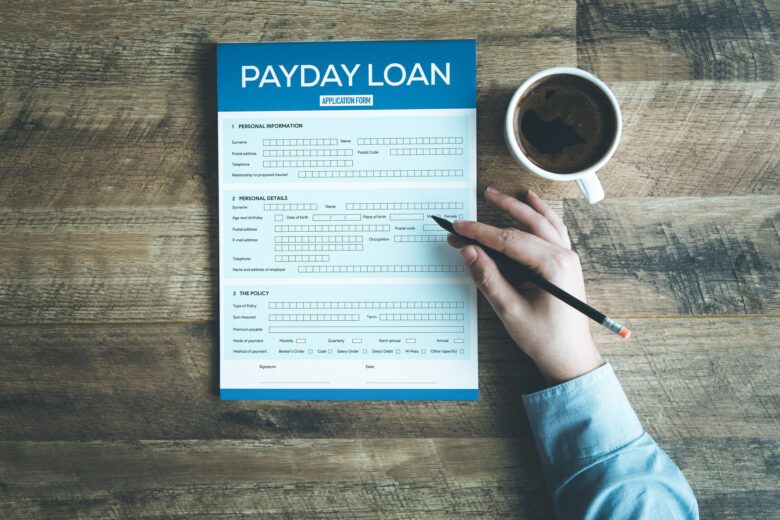
Payday loans can provide consumers with small sums of cash to help pay for the cost of moving. Payday loans may also be easy to apply for and receive relatively quickly. Borrowers are typically expected to repay these bad credit loans in a matter of weeks or months.
Payday loans and other cash advance types can satisfy short-term borrowing needs, but payday loans may feature high fees ranging from $10 to $30 for every $100 borrowed.
Image Credit: relif / istockphoto.
4. Borrow From Friends or Family

Borrowing money from friends or family can help you pay for the cost of moving. A friend or family member may loan you hundreds or thousands of dollars without charging you interest or offer to bankroll your moving expenses without any expectation of repayment.
Borrowing cash from a friend or relative can help you meet the cost of moving without relying on consumer lending products offered by banks or nonbank financial institutions, but your relationship with your friend or family member could sour if you fail to repay them back in full.
Image Credit: istockphoto.
5. Savings Account Withdrawals

Any money you have deposited in a savings account can be withdrawn and spent toward moving expenses. A savings account can allow you to earn interest payments on any money you’ve deposited into your account.
Using your savings to pay for the cost of moving can help you to meet these expenses without taking on new debt, but a savings account may place limits and conditions on the number of withdrawals and transactions you could make during any monthly statement cycle.
Image Credit: DepositPhotos.com.
The Takeaway

You may look forward to the adventure of packing up and resettling somewhere new, but the cost of moving may also promote financial and emotional stress. Fortunately, if you don’t have the cash at hand, there are several options for funding your move, including what’s called a moving loan, which is a kind of personal loan.
Learn More:
This article originally appeared on LanternCredit.com and was syndicated by MediaFeed.org.
The tips provided on this website are of a general nature and do not take into account your specific objectives, financial situation, and needs. You should always consider their appropriateness given your own circumstances.This article provides general background information only and is not intended to serve as legal or tax advice or as a substitute for legal counsel. You should consult your own attorney and/or tax advisor if you have a question requiring legal or tax advice.Disclaimer: Many factors affect your credit scores and the interest rates you may receive. SoFi is not a Credit Repair Organization as defined under federal or state law, including the Credit Repair Organizations Act. SoFi does not provide “credit repair” services or advice or assistance regarding “rebuilding” or “improving” your credit record, credit history, or credit rating. For details, see the FTC’s website on credit (https://www.consumer.ftc.gov/topics/credit-and-loans)Third-Party Brand Mentions: No brands or products mentioned are affiliated with SoFi, nor do they endorse or sponsor this article. Third-party trademarks referenced herein are property of their respective owners.
Lantern by SoFi:
This Lantern website is owned by SoFi Lending Corp., a lender licensed by the Department of Financial Protection and Innovation under the California Financing Law, license number 6054612; NMLS number 1121636. (www.nmlsconsumeraccess.org)
All rates, fees, and terms are presented without guarantee and are subject to change pursuant to each provider’s discretion. There is no guarantee you will be approved or qualify for the advertised rates, fees, or terms presented. The actual terms you may receive depends on the things like benefits requested, your credit score, usage, history and other factors.
*Check your rate: To check the rates and terms you qualify for, Lantern and/or its network lenders conducts a soft credit pull that will not affect your credit score. However, if you choose a product and continue your application, the lender(s) you choose will request your full credit report from one or more consumer reporting agencies, which is considered a hard credit pull and may affect your credit.
All loan terms, including interest rate, and Annual Percentage Rate (APR), and monthly payments shown on this website are from lenders and are estimates based upon the limited information you provided and are for information purposes only. Estimated APR includes all applicable fees as required under the Truth in Lending Act. The actual loan terms you receive, including APR, will depend on the lender you select, their underwriting criteria, and your personal financial factors. The loan terms and rates presented are provided by the lenders and not by SoFi Lending Corp. or Lantern. Please review each lender’s Terms and Conditions for additional details.
Many factors affect your credit scores and the interest rates you may receive. SoFi is not a Credit Repair Organization as defined under federal or state law, including the Credit Repair Organizations Act. SoFi does not provide “credit repair” services or advice or assistance regarding “rebuilding” or “improving” your credit record, credit history, or credit rating. For details, see the FTC’s website on credit (https://www.consumer.ftc.gov/topics/credit-and-loans)
Financial Tips & Strategies: The tips provided on this website are of a general nature and do not take into account your specific objectives, financial situation, and needs. You should always consider their appropriateness given your own circumstances.
Personal Loan:
SoFi Lending Corp. (“SoFi”) operates this Personal Loan product in cooperation with Even Financial Corp. (“Even”). If you submit a loan inquiry, SoFi will deliver your information to Even, and Even will deliver to its network of lenders/partners to review to determine if you are eligible for pre-qualified or pre-approved offers. The lenders/partners receiving your information will also obtain your credit information from a credit reporting agency. If you meet one or more lender’s and/or partner’s conditions for eligibility, pre-qualified and pre-approved offers from one or more lenders/partners will be presented to you here on the Lantern website. More information about Even, the process, and its lenders/partners is described on the loan inquiry form you will reach by visiting our Personal Loans page as well as our Student Loan Refinance page. Click to learn more about Even’s Licenses and Disclosures, Terms of Service, and Privacy Policy.
Personal loan offers provided to customers on Lantern do not exceed 35.99% APR. An example of total amount paid on a personal loan of $10,000 for a term of 36 months at a rate of 10% would be equivalent to $11,616.12 over the 36 month life of the loan.
Student Loan Refinance:
SoFi Lending Corp. (“SoFi”) operates this Student Loan Refinance product in cooperation with Even Financial Corp. (“Even”). If you submit a loan inquiry, SoFi will deliver your information to Even, and Even will deliver to its network of lenders/partners to review to determine if you are eligible for pre-qualified or pre-approved offers. The lender’s receiving your information will also obtain your credit information from a credit reporting agency. If you meet one or more lender’s and/or partner’s conditions for eligibility, pre-qualified and pre-approved offers from one or more lenders/partners will be presented to you here on the Lantern website. More information about Even, the process, and its lenders/partners is described on the loan inquiry form you will reach by visiting our Personal Loans page as well as our Student Loan Refinance page. Click to learn more about Even’s Licenses and Disclosures, Terms of Service, and Privacy Policy.
Student loan refinance loans offered through Lantern are private loans and do not have the debt forgiveness or repayment options that the federal loan program offers, or that may become available, including Income Based Repayment or Income Contingent Repayment or Pay as you Earn (PAYE).
Notice: Recent legislative changes have suspended all federal student loan payments and waived interest charges on federally held loans until 05/01/22. Please carefully consider these changes before refinancing federally held loans, as in doing so you will no longer qualify for these changes or other future benefits applicable to federally held loans.
Auto Loan Refinance:
Automobile refinancing loan information presented on this Lantern website is from Caribou. Auto loan refinance information presented on this Lantern site is indicative and subject to you fulfilling the lender’s requirements, including: you must meet the lender’s credit standards, the loan amount must be at least $10,000, and the vehicle is no more than 10 years old with odometer reading of no more than 125,000 miles. Loan rates and terms as presented on this Lantern site are subject to change when you reach the lender and may depend on your creditworthiness. Additional terms and conditions may apply and all terms may vary by your state of residence.
Secured Lending Disclosure:
Terms, conditions, state restrictions, and minimum loan amounts apply. Before you apply for a secured loan, we encourage you to carefully consider whether this loan type is the right choice for you. If you can’t make your payments on a secured personal loan, you could end up losing the assets you provided for collateral. Not all applicants will qualify for larger loan amounts or most favorable loan terms. Loan approval and actual loan terms depend on the ability to meet underwriting requirements (including, but not limited to, a responsible credit history, sufficient income after monthly expenses, and availability of collateral) that will vary by lender.
Life Insurance:
Information about insurance is provided on Lantern by SoFi Life Insurance Agency, LLC. Click here to view our licenses.
Image Credit: monkeybusinessimages/istockphoto.
More from MediaFeed

These are the top 50 safest cities in the US
Image Credit: Imgorthand.



