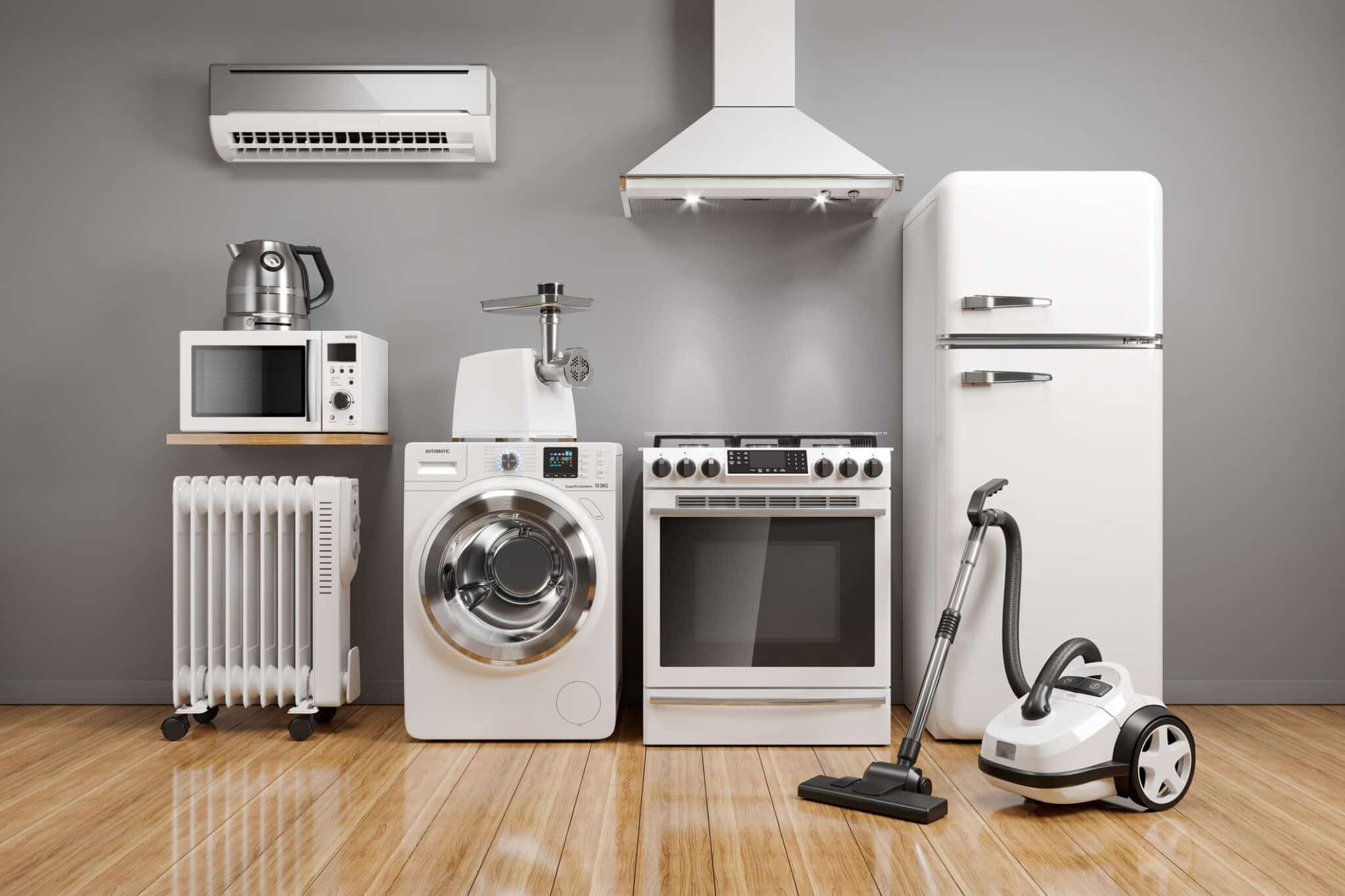
Appliance loans can cover the cost of kitchen appliances. These appliances, including refrigerators, dishwashers, ovens, microwaves and stovetops, can individually cost hundreds or thousands of dollars. To help pay for these expenses, consumers may consider a variety of appliance financing options.
Personal loans, credit cards, home equity loans, personal lines of credit and in-store financing can serve as appliance loans. Below, we explain what appliance loans are and uncover several factors that may affect the cost of new kitchen appliances.
Related: Most common home repairs
Image Credit: Grassetto / iStock.
What Are Appliance Loans?

Appliance loans, also known as appliance financing, are any financial lending product where consumers can borrow money to pay for the cost of buying an appliance. As mentioned above, personal loans, credit cards, home equity loans, personal lines of credit and in-store financing can all serve as an appliance loan.
Appliances can individually cost hundreds or thousands of dollars, while the cost of remodeling your kitchen can exceed $30,000, according to HomeAdvisor. Appliance loans can help you meet these expenses.
Image Credit: Grassetto / iStock.
Can You Pay for Kitchen Appliances With an Appliance Loan?

Consumers can purchase kitchen appliances with an appliance loan. As mentioned above, appliance loans are any financial lending product where you borrow money to pay for the cost of buying an appliance.
Kitchen appliances can consist of refrigerators, dishwashers, ovens, microwaves and stovetops. Appliance loans can finance those items, and appliance loans can also help pay for other household appliances outside of the kitchen.
Image Credit: DepositPhotos.com.
What Does a Kitchen Appliance Loan Cover?

Here are some home appliances a kitchen appliance loan may cover:
- Refrigerators
- Dishwashers
- Ovens
- Microwaves
- Cooktops or stovetops
- Kitchen sinks
- Ranges
Image Credit: PC Photography/istockphoto.
Typical Requirements for Appliance Loans

Typical requirements for an appliance loan may require borrowers to provide documentation verifying their identity, employment, and gross monthly income as part of the application process. Lenders may ask you to present photo identification, such as a driver’s license, and lenders may also ask you to provide your Social Security number.
Lenders may require borrowers to pledge collateral as a guarantee they will repay the appliance loan. Lenders may also require borrowers to have good credit scores and a low debt-to-income ratio to qualify for an appliance loan.
Appliance loans can be secured or unsecured. Secured loans require borrowers to offer an asset or personal property as collateral. Unsecured loans, including signature loans, are not backed by collateral and may be harder to get if you have poor credit.
Image Credit: AndreyPopov.
What Is the Average Cost of Kitchen Appliances?

The average cost of home appliances is $2,175, according to HomeAdvisor data accessed in January 2022. Refrigerators can cost several hundred dollars on the low end and more than $10,000 on the high end. Dishwashers can range from $330 to $1,900 depending on the brand, size and features.
Image Credit: JackF / iStock.
Price of Kitchen Appliances

Here are the price ranges for various kitchen appliances, according to HomeAdvisor data.
Image Credit: Lantern Credit / SoFi.
Refrigerator Prices
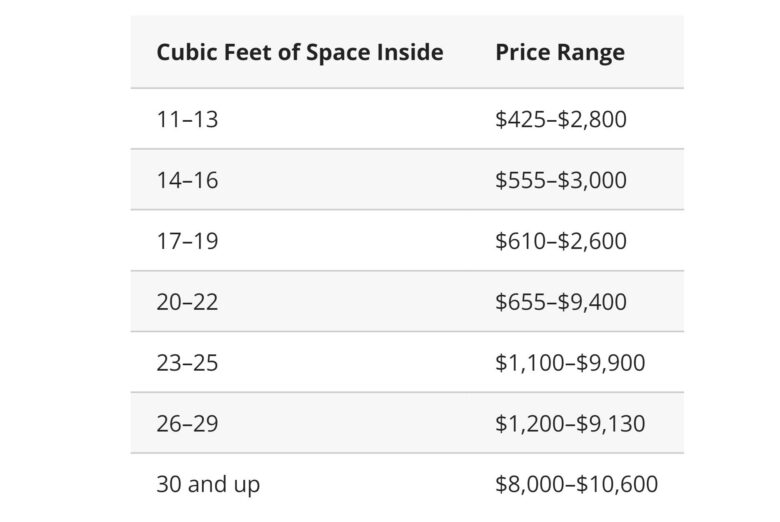
Here are refrigerator price ranges by size, according to HomeAdvisor data.
Image Credit: Lantern Credit / SoFi.
Kitchen Appliance Repair Cost

The cost of repairing a faulty kitchen appliance can range from $50 to $450 in most cases, while the cost of repairing old appliances can run much higher, according to HomeAdvisor.
Refrigerators have a 13-year average life expectancy, according to Fixr, a company that researches and publishes data about the home remodeling industry.
Replacing a faulty kitchen appliance is sometimes more cost-effective than repairing it, especially if the appliance is more than 10 years old. Repairing old refrigerators can cost up to $1,200, according to Fixr.
Image Credit: DepositPhotos.com.
How Often Should You Replace Appliances?

Consumers may consider replacing their appliances once the appliance reaches the end of its useful life. Appliances can last for 10 to 15 years on average with regular use, according to HomeAdvisor.
As mentioned above, replacing a faulty kitchen appliance is sometimes more cost-effective than repairing it, especially if the appliance is more than 10 years old.
Image Credit: Nortonrsx / iStock.
Factors That Affect the Cost of New Kitchen Appliances

Here are some factors that may affect the cost of new kitchen appliances:
- Brand: High-end kitchen appliance brands generally cost more than budget brands. For example, kitchen appliances under the Miele, Liebherr and Dacor brands may cost thousands of dollars, while similar appliances under the Haier, Insignia and Frigidaire brands may cost hundreds of dollars.
- Quality: High-quality appliances generally cost more than similar appliances of lower quality. Consumers can rank appliance quality based upon their user experience. For example, J.D. Power’s 2021 U.S. Appliance Satisfaction Study is based upon 21,477 evaluations from customers who purchased home appliances. Samsung ranked the highest in customer satisfaction among cooktops in the 2021 J.D. Power study, while Frigidaire ranked the lowest. Samsung’s high-end cooktops generally cost more than Frigidaire’s high-end cooktops.
- Energy Efficiency: Energy Star-certified appliances meeting strict energy efficiency requirements set by the U.S. Environmental Protection Agency generally cost more than their noncertified counterparts. Energy Star-certified appliances consume less energy than their noncertified counterparts and therefore can help consumers save money on their energy bills.
- Rebates: Some gas or electric utility companies may offer rebates up to $75 for customers who purchase Energy Star-certified refrigerators. Energy Star-certified appliances can be $30 to $200 more expensive than their noncertified counterparts, according to HomeAdvisor.
- Supply & Demand: Bottlenecks in the supply chain and high demand for kitchen appliances can lead to soaring prices for these items. Consumer Price Index inflation data show the price for major appliances, including refrigerators, stoves, ovens and microwaves, increased 8.4% from December 2020 to December 2021.
Image Credit: LanaStock / iStock.
Other Ways to Finance the Purchase of Kitchen Appliances

Here are some of the ways consumers can finance the purchase of kitchen appliances.
Image Credit: AndreyPopov/ iStock.
1. Credit Cards

Borrowers may use credit cards to finance the purchase of kitchen appliances. Credit cards are a revolving line of credit, allowing cardholders to make transactions up to the card’s credit limit.
Credit card companies may offer an interest-free grace period on new purchases. Consumers with good credit may qualify for a credit card that offers 0% interest on purchases for a 21-month promotional period.
Image Credit: DepositPhotos.com.
2. Personal Lines of Credit

Borrowers can use a personal line of credit to finance the purchase of kitchen appliances. Personal lines of credit are revolving forms of credit similar to credit cards. The personal line of credit allows borrowers to withdraw funds up to a set limit for personal spending.
Borrowers can repay their personal line of credit debt balance on a flexible timeline with minimum monthly payments or greater.
Image Credit: fizkes/istockphoto.
3. Personal Loans

You may finance the purchase of kitchen appliances with a personal loan. The purpose of a personal loan is to provide borrowers with a lump sum of money and the freedom to spend it on virtually any personal endeavor, such as debt consolidation or buying a new refrigerator.
The personal loan impact on your credit score could be negative if you miss payments and positive if you make consistent payments on time.
The advantages of using a personal loan over revolving credit are the personal loan can provide borrowers with a lump sum of cash, lower rates of interest, and a predictable repayment schedule.
Image Credit: istockphoto/demaerre.
4. Home Equity Loans

Home equity loans can provide homeowners with a lump sum of money to use for kitchen remodeling. Kitchen remodeling projects can exceed $30,000 and may include the purchase and installation of new appliances.
These loans allow homeowners to borrow against the equity of their home as collateral. Some lenders may allow you to borrow up to 80% of the equity in your home.
Image Credit: Julie Deshaies / iStock.
5. In-Store Financing

Retailers may offer in-store financing to help you pay for the cost of buying, delivering, and installing a kitchen appliance. Some retailers may allow you to make interest-free monthly payments over a six-month period.
Image Credit: GeorgeRudy / istockphoto.
The Takeaway

Every home needs a kitchen, and the kitchen needs appliances to be complete. Remodeling a kitchen can cost more than $30,000, while buying individual appliances can easily cost hundreds or thousands of dollars.
This article originally appeared on LanternCredit.com and was syndicated by Mediafeed.org.
Learn More:
This article originally appeared on LanternCredit.com and was syndicated by Mediafeed.org.
Lantern by SoFi:
This Lantern website is owned by SoFi Lending Corp., a lender licensed by the Department of Financial Protection and Innovation under the California Financing Law, license number 6054612; NMLS number 1121636. (www.nmlsconsumeraccess.org)
All rates, fees, and terms are presented without guarantee and are subject to change pursuant to each provider’s discretion. There is no guarantee you will be approved or qualify for the advertised rates, fees, or terms presented. The actual terms you may receive depends on the things like benefits requested, your credit score, usage, history and other factors.
*Check your rate: To check the rates and terms you qualify for, Lantern and/or its network lenders conducts a soft credit pull that will not affect your credit score. However, if you choose a product and continue your application, the lender(s) you choose will request your full credit report from one or more consumer reporting agencies, which is considered a hard credit pull and may affect your credit.
All loan terms, including interest rate, and Annual Percentage Rate (APR), and monthly payments shown on this website are from lenders and are estimates based upon the limited information you provided and are for information purposes only. Estimated APR includes all applicable fees as required under the Truth in Lending Act. The actual loan terms you receive, including APR, will depend on the lender you select, their underwriting criteria, and your personal financial factors. The loan terms and rates presented are provided by the lenders and not by SoFi Lending Corp. or Lantern. Please review each lender’s Terms and Conditions for additional details.
Many factors affect your credit scores and the interest rates you may receive. SoFi is not a Credit Repair Organization as defined under federal or state law, including the Credit Repair Organizations Act. SoFi does not provide “credit repair” services or advice or assistance regarding “rebuilding” or “improving” your credit record, credit history, or credit rating. For details, see the FTC’s website on credit (https://www.consumer.ftc.gov/topics/credit-and-loans)
Financial Tips & Strategies: The tips provided on this website are of a general nature and do not take into account your specific objectives, financial situation, and needs. You should always consider their appropriateness given your own circumstances.
Personal Loan:
SoFi Lending Corp. (“SoFi”) operates this Personal Loan product in cooperation with Even Financial Corp. (“Even”). If you submit a loan inquiry, SoFi will deliver your information to Even, and Even will deliver to its network of lenders/partners to review to determine if you are eligible for pre-qualified or pre-approved offers. The lenders/partners receiving your information will also obtain your credit information from a credit reporting agency. If you meet one or more lender’s and/or partner’s conditions for eligibility, pre-qualified and pre-approved offers from one or more lenders/partners will be presented to you here on the Lantern website. More information about Even, the process, and its lenders/partners is described on the loan inquiry form you will reach by visiting our Personal Loans page as well as our Student Loan Refinance page. Click to learn more about Even’s Licenses and Disclosures, Terms of Service, and Privacy Policy.
Personal loan offers provided to customers on Lantern do not exceed 35.99% APR. An example of total amount paid on a personal loan of $10,000 for a term of 36 months at a rate of 10% would be equivalent to $11,616.12 over the 36 month life of the loan.
Student Loan Refinance:
SoFi Lending Corp. (“SoFi”) operates this Student Loan Refinance product in cooperation with Even Financial Corp. (“Even”). If you submit a loan inquiry, SoFi will deliver your information to Even, and Even will deliver to its network of lenders/partners to review to determine if you are eligible for pre-qualified or pre-approved offers. The lender’s receiving your information will also obtain your credit information from a credit reporting agency. If you meet one or more lender’s and/or partner’s conditions for eligibility, pre-qualified and pre-approved offers from one or more lenders/partners will be presented to you here on the Lantern website. More information about Even, the process, and its lenders/partners is described on the loan inquiry form you will reach by visiting our Personal Loans page as well as our Student Loan Refinance page. Click to learn more about Even’s Licenses and Disclosures, Terms of Service, and Privacy Policy.
Student loan refinance loans offered through Lantern are private loans and do not have the debt forgiveness or repayment options that the federal loan program offers, or that may become available, including Income Based Repayment or Income Contingent Repayment or Pay as you Earn (PAYE).
Notice: Recent legislative changes have suspended all federal student loan payments and waived interest charges on federally held loans until 05/01/22. Please carefully consider these changes before refinancing federally held loans, as in doing so you will no longer qualify for these changes or other future benefits applicable to federally held loans.
Auto Loan Refinance:
Automobile refinancing loan information presented on this Lantern website is from Caribou. Auto loan refinance information presented on this Lantern site is indicative and subject to you fulfilling the lender’s requirements, including: you must meet the lender’s credit standards, the loan amount must be at least $10,000, and the vehicle is no more than 10 years old with odometer reading of no more than 125,000 miles. Loan rates and terms as presented on this Lantern site are subject to change when you reach the lender and may depend on your creditworthiness. Additional terms and conditions may apply and all terms may vary by your state of residence.
Secured Lending Disclosure:
Terms, conditions, state restrictions, and minimum loan amounts apply. Before you apply for a secured loan, we encourage you to carefully consider whether this loan type is the right choice for you. If you can’t make your payments on a secured personal loan, you could end up losing the assets you provided for collateral. Not all applicants will qualify for larger loan amounts or most favorable loan terms. Loan approval and actual loan terms depend on the ability to meet underwriting requirements (including, but not limited to, a responsible credit history, sufficient income after monthly expenses, and availability of collateral) that will vary by lender.
Life Insurance:
Information about insurance is provided on Lantern by SoFi Life Insurance Agency, LLC. Click here to view our licenses.
Image Credit: Prostock-Studio / istockphoto.
More from MediaFeed

How much does it cost to remodel a kitchen?
Image Credit: hikesterson / iStock.