There are times when you may need to get money to someone quickly and meeting in person isn’t possible. Or you may want to surprise someone with a monetary gift and have it show up as a deposit in their bank account.
Fortunately, there are a myriad of ways you can directly deposit money into another person’s account. The method you choose can depend on how fast you need to send the money; whether you want to deposit cash, a check, or a money order, or transfer funds electronically; and how much you’re willing to shell out for fees.
Image Credit: ipopba/istockphoto.
How to Deposit Money into Someone Else’s Bank Account

1. Money Transfer App
A mobile money transfer app falls under the category of P2P transfers, aka peer-to-peer payments. There are many money transfer apps out there including Venmo, Apple Cash, Google Pay, PayPal, and Facebook’s Meta Pay. Here’s how they work:
- These apps allow you to electronically send money instantly (or close to it) to someone else via your mobile device. Using one can be an easy and speedy way to transfer money into someone else’s account. It’s also extremely popular. A 2022 survey by Consumer Reports found nearly two-thirds of Americans use a P2P app to send people money.
- To use a money transfer app, you first need to download it to your mobile device and then create an account. Once you do this, you’ll enter the payment source you want to use to fund the deposit. The choices include linking to your bank account, debit card, or credit card. After you do this step, you’re ready to send someone funds through the mobile money transfer app.
- Typically, recipients also need to have an account with the same money transfer app in order for the funds to go directly to them. If you’re sending someone money through a money transfer app, you don’t need to know the payee’s personal or bank account information in order to make the transaction but rather their phone number or email address. This is how the person you’re sending money to will instantly know they’ve received the funds, based on their preference.
- The recipient can have the money sent directly to their bank account, if they’ve chosen that option, or they may decide to have the money received on a prepaid debit card.
Image Credit: MarioGuti/istockphoto.
2. Bank-to-Bank Transfers

A bank-to-bank transfer, also referred to as an external transfer, is exactly what it sounds like. By visiting your bank, calling their customer service number, or through your bank’s website or mobile app, you can efficiently transfer money from one bank to another. Here are details on how they typically work:
- Many banks offer customers an external transfer feature on their websites to click on in order to send money to an account at another financial institution. Your bank may have you verify your identity before completing the transaction. To do an external transfer to another person’s account at a different bank, you’ll need the recipient’s bank account number and their bank’s routing number.
- One option for a bank-to-bank transfer is using a widespread online service called Zelle, which is used by more than 1,700 financial institutions in the U.S. With Zelle, you can send money to someone, regardless of where they bank. If your bank offers Zelle, all you have to do is log on to your account, enter the recipient’s email address or mobile phone number, and send the desired amount of money. A payee already enrolled in Zelle will get the money directly deposited into their bank account, typically in minutes. When it arrives, they can then manage the checking account and move the funds if they like. If they’re not signed up, Zelle sends a notification alert anyway, explaining how they can register to receive their money easily and quickly.
- Keep in mind that some banks charge a fee to do a bank-to-bank transfer and may impose limits on how much money you send at a time and how often you can do an external transfer.
Image Credit: KevinAlexanderGeorge/istockphoto.
3. Electronic Deposit Using a Website

Money transfer websites allow you to electronically move money into someone else’s bank account. PayPal, MoneyGram, and Western Union permit you to transfer money from your account to another person’s through their websites. (Worth noting: Walmart stores may offer the opportunity to send an electronic payment onsite, by MoneyGram, Western Union, or Ria.)
A perk of using these sites is it enables you to send funds without having to sign in to your bank’s app or website. The funds draw from your checking account, debit card, or credit card.
Image Credit: Ridofranz/istockphoto.
4. Making a Cash Deposit at a Bank

One of the most straightforward ways to deposit funds into someone else’s bank account is with cash. All you have to do is walk into the bank where the payee has an account and let the teller know you want to deposit cash into their account. You’ll need to provide the recipient’s name and bank account number.
However, whether or not you’re able to deposit cash into another person’s account will depend on the bank. Some large banks — including JPMorgan Chase, Bank of America, and Wells Fargo — have banned cash deposits from non-customers. Why? Handling cash, especially in large amounts, can signal fraud or other types of criminal activity, including money laundering. Before visiting the bank in person with cash in hand, check that the bank will allow you to do so.
Image Credit: Alina555/istockphoto.
5. Using a Money Order
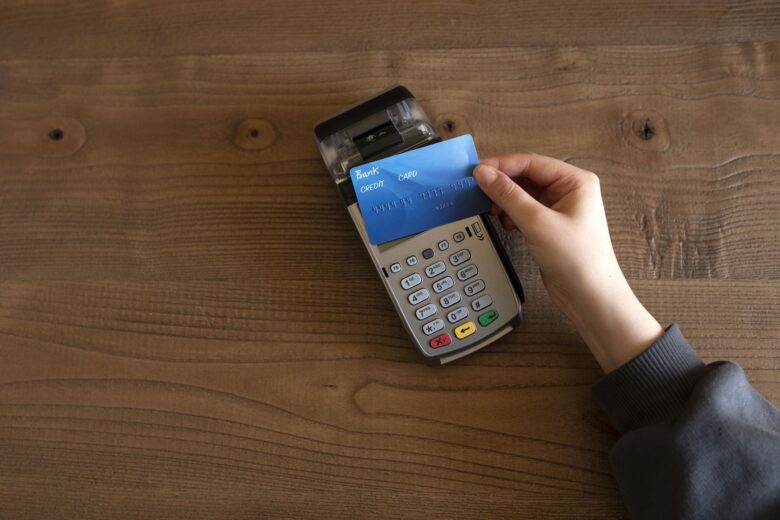
A money order is another form of currency that can be used to deposit funds into someone else’s bank account. Money orders are a guaranteed payment because you prepay so it works a lot like cash.There’s no chance a money order will bounce and it will clear in someone’s account almost immediately. Here’s how it works:
- You can purchase a money order with cash or a debit card at a bank, credit union, U.S. Post Office, check cashing outlets, some supermarkets, or national retailers, such as Walmart , 7-Eleven, and CVS.
- On the money order, you’ll fill in the recipient’s legal or business name plus the dollar amount of the money order. Then, you’ll fill in your name, address, and sign the front of the money order on the line where it indicates Purchaser/Signer for Drawer.
- Every money order comes with a receipt and a tracking number so you have proof you sent the money, in case there’s any dispute with the payee.
- Generally, you can get a money order for up to $1,000, but the maximum can be lower depending on where you purchase it.
- Be aware that you’ll likely pay a fee for obtaining a money order. Fees can range from under $1 to $10, depending where you go. Post offices and retailers charge less than if you go to a bank, though if you get the money order at the bank where you have an account, the bank may waive the fee. Cash and debit cards are the norm when buying a money order. While paying with a credit card may be possible, it may cost more.
Image Credit: izzetugutmen/istockphoto.
6. Writing a Personal Check
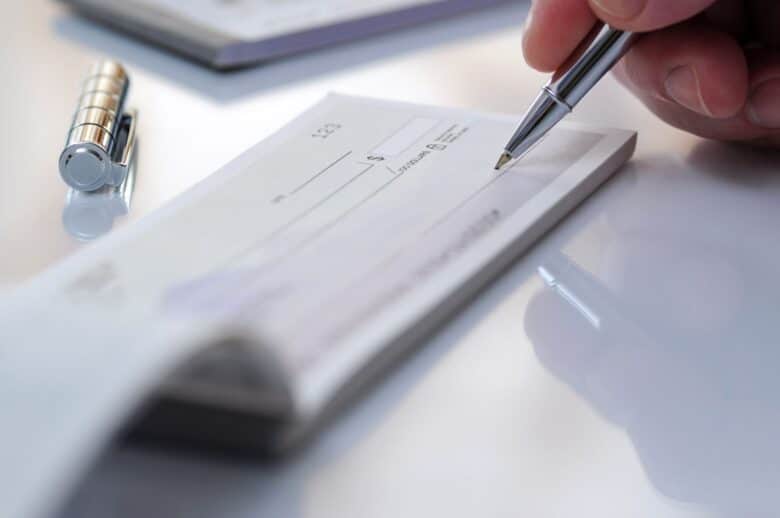
You can likely deposit a check into someone else’s account. Unlike a cash deposit, which is harder to trace, a check comes from another account, so the bank knows from whom and where it came from.
As you would with a cash deposit, you’ll need to know the person’s account number in order to fulfill the transaction. Since a check can take a few days to clear, if you want the person to receive your money faster, it’s better to stick with some faster options, such as sending the money electronically or depositing cash.
Image Credit: payphoto/istockphoto.
7. Sending a Wire Transfer
Wire transfers are another way you can move money from one bank account to another. Here’s the scoop:
- This method of sending payment can be done at banks, credit unions, or through such companies such as Western Union, MoneyGram, or Wise.
- People tend to send money through a wire transfer when they want a fast deposit, the sum is large, or the funds need to go to a different bank than the sender’s.
- Wire transfers are also often used for sending money internationally. To send a wire transfer, you’ll need the name of the recipient, their bank account number, and their bank’s routing number.
- Wire transfer fees can range from $10 to $50, depending on whether you’re shifting money into a U.S. bank account or one in another country. Before you transmit money this way, make sure both your bank account and the payee’s account are both set up for wire transfers.
Image Credit: martinrlee/istockphoto.
8. Getting a Cashier’s Check

Another option for directly depositing money into someone else’s account is with a cashier’s check. This type of check is an official bank check you obtain from the bank itself. It’s usually used for larger sums of money and is a guaranteed payment, since it’s paid from the bank’s own funds.
- The process for obtaining a cashier’s check is easy. If you want to use a cashier’s check to make a deposit in another person’s account, you pay the bank the amount you want to send to the recipient and a teller or cashier will issue an official bank check for that amount. The payee’s name will be on the check in the ‘payable to’ section, so it can be deposited into their account.
- Using a cashier’s check speeds up the time the receiver gets their deposit. Where a personal check can take a few days to clear, funds from a cashier’s check deposit are typically available in the third party’s account the next business day.
- One caveat: You’ll most likely have to pay a fee for a cashier’s check, usually around $10 to $15. Some banks, though, may forgo charging the fee for account holders who meet certain balance requirements.
Image Credit: AndreyPopov/istockphoto.
Alternatives to Direct Deposit

There are other ways to give someone money without making a direct deposit into their account. Here’s some substitutes to consider:
- Gift cards. Who doesn’t love a gift card? After all, gift cards are currency, and if it’s a Visa, Mastercard, or American Express gift card, they can be used virtually anywhere these cards are accepted. You can also purchase a specific gift card for a certain store if you know the recipient is a frequent customer. You might give gift cards usable at popular retailers such as Target, Whole Foods, Starbucks, Dunkin’, and Amazon.com.
- Prepaid debit cards. These types of cards are purchased with a specific amount of money already loaded on it. Many of these cards come with a Mastercard or Visa logo printed on the front and look like credit cards. Similar to a gift card with these logos, you can use these cards at a myriad of places and even towards paying bills. Be aware that many prepaid cards can come with very high fees when activating the card, adding money, or using it at an ATM.
- Hand them cash or a check in person. There’s nothing like giving cash or a personal check to someone in the flesh. Not only do you ensure they receive it, but if it’s an unexpected gesture, the look of joy and gratitude on their face can be extremely rewarding.
- Pay it forward. Gift the gift of generosity by paying a loved one’s utility or credit card bill, or if you’re flush, a larger expense. You can make the payment to the bill payer directly as long as you know the person’s account number. You can pay by mailing a check, paying by phone, or through online billpay. If sending a paper check or paying with an electronic check, be sure to put the person’s name and account number for whom you’re paying in the memo section.
Image Credit: LightFieldStudios/istockphoto.
The Takeaway

If you want to make a direct deposit into someone else’s bank account, there’s no shortage of ways to go about it. Some of these various choices include sending a wire transfer, making a cash deposit at the bank, or using a mobile money transfer app. You can also go with some creative alternatives such as a prepaid debit card or surprising them by taking care of a bill they may have trouble paying.
This article originally appeared on SoFi.com and was syndicated by MediaFeed.org.
Please understand that this information provided is general in nature and shouldn’t be construed as a recommendation or solicitation of any products offered by SoFi’s affiliates and subsidiaries. In addition, this information is by no means meant to provide investment or financial advice, nor is it intended to serve as the basis for any investment decision or recommendation to buy or sell any asset. Keep in mind that investing involves risk, and past performance of an asset never guarantees future results or returns. It’s important for investors to consider their specific financial needs, goals, and risk profile before making an investment decision.
The information and analysis provided through hyperlinks to third party websites, while believed to be accurate, cannot be guaranteed by SoFi. These links are provided for informational purposes and should not be viewed as an endorsement. No brands or products mentioned are affiliated with SoFi, nor do they endorse or sponsor this content.
Communication of SoFi Wealth LLC an SEC Registered Investment Advisor
SoFi isn’t recommending and is not affiliated with the brands or companies displayed. Brands displayed neither endorse or sponsor this article. Third party trademarks and service marks referenced are property of their respective owners.
Communication of SoFi Wealth LLC an SEC Registered Investment Adviser. Information about SoFi Wealth’s advisory operations, services, and fees is set forth in SoFi Wealth’s current Form ADV Part 2 (Brochure), a copy of which is available upon request and at www.adviserinfo.sec.gov. Liz Young is a Registered Representative of SoFi Securities and Investment Advisor Representative of SoFi Wealth. Her ADV 2B is available at www.sofi.com/legal/adv.
Image Credit: MStudioImages/istockphoto.
More from MediaFeed

The biggest money scams in American history
Image Credit: Tero Vesalainen/istockphoto.