Indiana is in the heart of the Midwest, filled with sprawling farmlands and a booming automotive industry. You’ll experience all four seasons in the Hoosier State, with warm summers, freezing winters, and rewarding springs and falls.
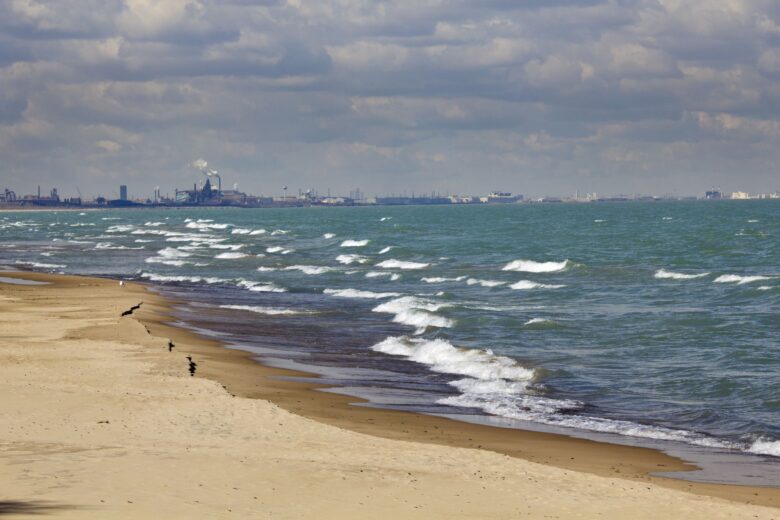
Racing fans flock to Indianapolis for the Indy 500, while college football and basketball attract students — and spectators — to the University of Notre Dame and Indiana University, respectively. And if you love Christmas, you’ll want to spend time in Indiana’s charming Santa Claus town. Enjoy the outdoors? Head north to explore Indiana Dunes National Park and the beaches of Lake Michigan.
But Indiana is more than just a place to grow corn and watch a football game. It’s also a great place to build your life. In fact, Indiana is among the most affordable places to live, with a cost of living that is 16.3% below the national average and a median household income of nearly $62,000.
Thinking of buying a home in Indiana? Property taxes are also lower than the national average, by nearly a quarter of a percent. Of course, Indiana is a large state with plenty of areas to consider. Below, you’ll find our guide to the best places to live in Indiana, based on your goals and needs.
Image Credit: Ultima_Gaina/istockphoto.
Best Places to Live in Indiana
Finding the best place to live in Indiana really comes down to your wants, needs, and budget. Young adults may be more interested in the nightlife and job opportunities of places like Indianapolis and South Bend. Retirees may prefer to spend time on the water, living in a town near Lake Michigan. Families might appreciate the school districts in some of Indiana’s best suburbs.
To help you out, we’ve broken down the best places in Indiana to live based on several different categories. Use these lists to narrow down your search for your Indiana dream home.
Image Credit: benkrut/istockphoto.
Best Affordable Places to Live in Indiana

If you’ve been examining the cost of living by state, you’ve likely found that Indiana is one of the most affordable places to live in the whole country. But where you settled down in the state can still impact your finances. Below, we’ve rounded up five of the best affordable places to live in the Hoosier State.
1. Richmond
Barely west of the border between Indiana and Ohio, Richmond’s closest major metropolis is actually Dayton, Ohio. But you don’t need to wander out of Richmond for things to do. Stop by the nearby Amish Market, get out and bike to a beautiful park, and enjoy farm fresh food in some of Richmond’s best (and affordable!) restaurants.
- Population: 35,513
- Median Household Income: $41,569
- Cost of Living: 82.9% of U.S. average
- Median Rent Price: $743
- Home Price-to-Income Ratio: 2.88
- Average Property Tax: 1.06%
Housing Affordability: Richmond’s rent prices have been creeping up over the last year, but they’re still incredibly affordable, at a median monthly cost of $743. Buying a house in Richmond is also feasible; the home price-to-income ratio is 2.88.
Image Credit: SeanPavonePhoto/istockphoto.
2. Kokomo

Kokomo, Indiana, is an affordable place to live, with plenty of free things to do for families on a budget. The downtown area is walkable, and you’ll find plenty of parks and trails to explore. Jobs in the automotive, manufacturing, and tech industry abound.
Population: 59,671
- Median Household Income: $51,450
- Cost of Living: 86.8% of U.S. average
- Median Rent Price: $729
- Home Price-to-Income Ratio: 3.49
- Average Property Tax: 0.94%
Housing Affordability: Rent in Kokomo is exceptionally affordable, at $729 a month, and it’s on a downward trend. That’s good news for people thinking of moving to the city, where the median household income is more than $51K. The average home sale price here is around $179,000 and the home price-to-income ratio is 3.49.
Image Credit: William Reagan/istockphoto.
3. South Bend
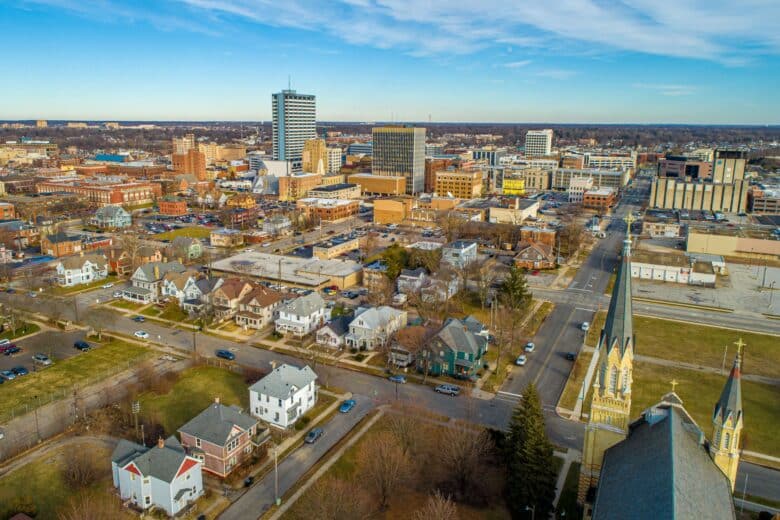
Over the last decade and a half, South Bend has undergone a major revitalization effort that has made it an even more desirable place to live. It’s now filled with pedestrian-friendly streets, new housing units, and great job opportunities. The desirability of the town has, however, sent rent and housing prices up, but overall, South Bend has a low cost of living.
- Population: 103,110
- Median Household Income: $46,002
- Cost of Living: 86.4% of U.S. average
- Median Rent Price: $1,250
- Home Price-to-Income Ratio: 3.88
- Average Property Tax: 1.07%
Housing Affordability: South Bend may have a low cost of living in general, but housing costs — whether renting or buying — are on the higher side for Indiana. As this town continues to be revitalized and attracts more eager buyers, rent and housing prices will likely stay high. South Bend has the highest home price-to-income ratio of any of the five best affordable places to live in Indiana. The average home value here is $170,000.
Image Credit: Aaron Yoder/istockphoto.
4. Fort Wayne
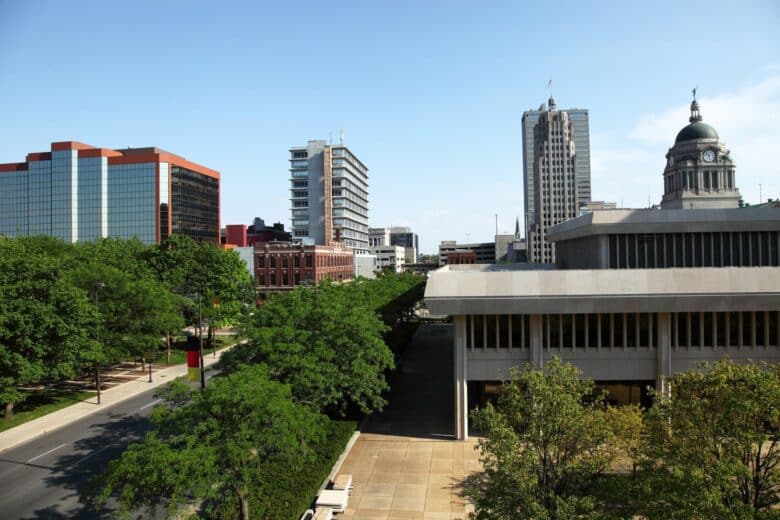
Fort Wayne offers an abundance of job opportunities in manufacturing, but as you leave the city center, you’ll find that the area’s main source of income is agriculture. As a larger city in the Hoosier State, Fort Wayne offers plenty to do, from zoos and museums to restaurants and theaters.
- Population: 267,927
- Median Household Income: $53,978
- Cost of Living: 89.3% of U.S. average
- Median Rent Price: $1,200
- Home Price-to-Income Ratio: 3
- Average Property Tax: 1.01%
Housing Affordability: At $1,200 a month in rent costs, Fort Wayne is a little less welcoming to renters, and prices have not dropped in the last year. This large city might be more attractive if you’re willing to buy a home. It has a reasonable home price-to-income ratio; assuming your family’s salary is in line with the median, buying a home in Fort Wayne should be practical. The average price of homes sold here is $162,000.
Image Credit: DenisTangneyJr/istockphoto.
5. Muncie
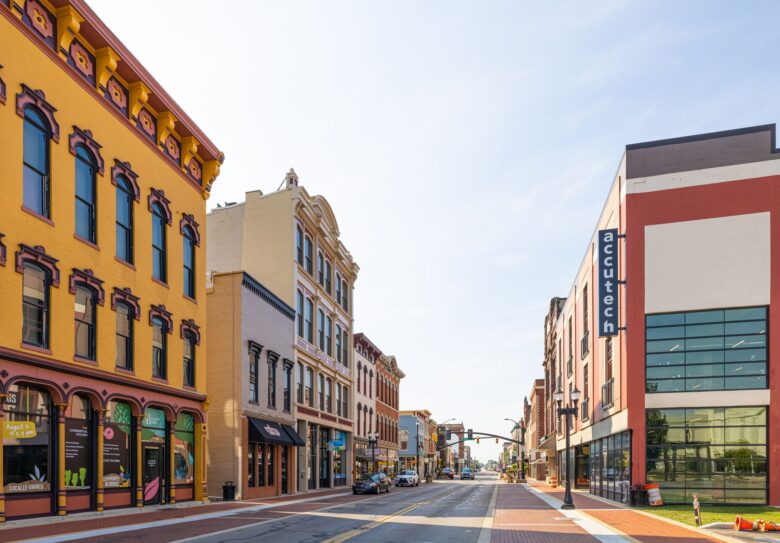
Muncie may not be as flashy as Indianapolis, but it’s certainly an affordable place to live. Among its largest employers are Ball State University and Indiana University Health Ball Hospital. Even families on a budget will find plenty of affordable things to do, including the Muncie Children’s Museum and the local planetarium.
- Population: 65,076
- Median Household Income: $36,661
- Cost of Living: 91.3% of U.S. average
- Median Rent Price: $850
- Home Price-to-Income Ratio: 3.53
- Average Property Tax: 0.87%
Housing Affordability: Rent is highly affordable in Muncie and is on a downward trend as inflation cools. If you’re looking to buy, you likely won’t need a jumbo mortgage loan, however, you will need to pull in more than the median household income, as housing prices are well above what families can afford on $37,000 a year.
Image Credit: Roberto Galan/istockphoto.
Best Places to Live in Indiana for Families

Families considering a move to or within Indiana are typically looking for a quiet suburb or small town with plenty of activities for kids; good schools are a draw, too. Here are our top picks for places to live in Indiana for families:
1. Carmel
Carmel is one of the best places to live in Indiana for families. This suburban town north of Indianapolis is close enough to the big city that families have plenty to do (and plenty of job opportunities), but it’s away from the loud hustle and bustle of downtown. Carmel offers families lots of good features: ample shopping centers, plenty of outdoor spaces, and a delightful arts district. Parents will especially appreciate its well-reviewed schools.
- Population: 101,964
- Median Household Income: $119,772
- Cost of Living: 92.5% of U.S. average
- Median Rent Price: $2,308
- Home Price-to-Income Ratio: 1.13
- Average Property Tax: 1.06%
Housing Affordability: Families are drawn to Carmel — and it shows in housing costs. The median rent climbs past $2,300. That said, families here tend to have a higher household income, which means those who buy houses actually achieve a manageable home price-to-income ratio. If you’re planning to buy a house in Carmel, review the different types of mortgage loans available to you before making a decision.
Image Credit: alexeys/istockphoto.
2. Indianapolis
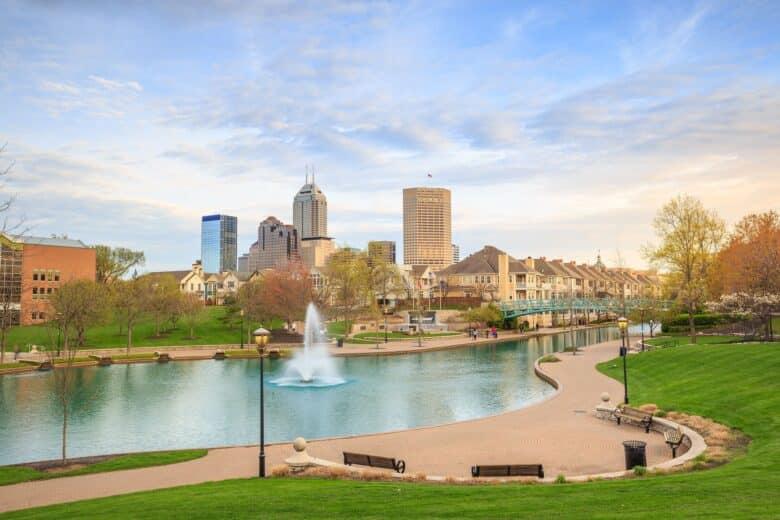
The capital of Indiana offers everything a family needs. There’s always something going on downtown, and you have easy access to restaurants, healthcare, and entertainment, including a fantastic zoo. Parents like the school system here. If your family likes peace and quiet, however, this busy city might not be right for you.
- Population: 880,621
- Median Household Income: $54,321
- Cost of Living: 92.5% of U.S. average
- Median Rent Price: $1,375
- Home Price-to-Income Ratio: 4.3
- Average Property Tax: 1.06%
Housing Affordability: For being a major city, Indianapolis has an impressive median rent price of $1,375. Families who want to purchase a home should budget about $235,000; that’s the median home price in the city.
Image Credit: f11photo/istockphoto.
3. Fishers

Another popular suburb of Indianapolis, Fishers offers access to all that the city has to offer, but in its own thriving — yet less busy — suburb. Because it’s built along the Geist Reservoir, families can spend a lot of time out on the water. There’s always something going on in Fishers, so it’s great for active families.
- Population: 101,966
- Median Household Income: $117,503
- Cost of Living: 92.5% of U.S. average
- Median Rent Price: N/A
- Home Price-to-Income Ratio: 3.38
- Average Property Tax: 1.06%
Housing Affordability: Housing costs in Indianapolis’ suburbs, Fishers included, tend to be high. In Fishers, the typical home price-to-income ratio is 3.38 — meaning homes cost more than three times a household’s annual income. Most families here own their home, but a family looking to try life in Fishers can rent an entire house for around $2,200 a month.
Image Credit: William Reagan/istockphoto.
4. South Bend

South Bend has flourished in recent years, so it’s making its second appearance on our list. The city is a great, peaceful place to raise a family. Families focused on education will appreciate the well-regarded school system. Plus, there’s plenty for families to do throughout town. Howard Park offers ice skating and an immense, ADA-accessible playground with activities for children from ages 2 to 12.
- Population: 103,110
- Median Household Income: $46,002
- Cost of Living: 86.4% of U.S. average
- Median Rent Price: $1,250
- Home Price-to-Income Ratio: 3.88
- Average Property Tax: 1.07%
Housing Affordability: Housing costs in South Bend, though very affordable by national standards, have been rising for renters and buyers. The home price-to-income ratio sits at 3.88. Just because housing is on the higher side in South Bend doesn’t mean it’s impossible to buy a home on a budget. Here are our tips to qualify for a mortgage for a home within your price range.
Image Credit: ReDunnLev/istockphoto.
5. Noblesville

Noblesville offers families a mix of great outdoor activities (including time on the White River), and easy access to downtown Indianapolis, when needed. Families may be drawn here by its top-notch schools but will also enjoy outdoor concerts in the summer and visiting the beautiful Forest Park and its famous “Little Beauty” Carousel.
- Population: 72,748
- Median Household Income: $89,258
- Cost of Living: 92.5%
- Median Rent Price: $1,900
- Home Price-to-Income Ratio: 3.99
- Average Property Tax: 1.06%
Housing Affordability: Families who want to own a house in Noblesville will find an average home value of $357,000. Rent is similarly on the high side for Indiana, at $1,900 a month. Think you’re ready to buy a house in Noblesville? Learn how the mortgage preapproval process works first.
(Learn more: Personal Loan Calculator)
Image Credit: Jose A Perez/istockphoto.
Best Places to Live in Indiana for Young Adults
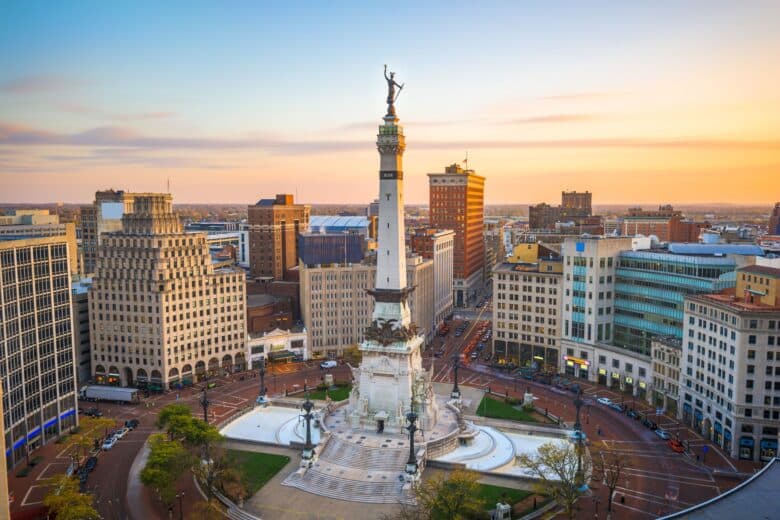
Young adults in Indiana often prioritize a location because of its colleges, nightlife, and job opportunities. Here are some of the best places in Indiana to live if you’re just leaving high school or college.
1. Indianapolis
Young adults can’t go wrong with Indianapolis. There’s so much to do downtown, from sporting events to dueling piano bars to the zoo to fine dining. Meet friends for a cup of coffee and a walk around the canals. Job opportunities can be found in the city’s financial district and the city is a major employer in the healthcare sector, with Eli Lilly & Co. and Roche Diagnostics Corp. among top employers.
- Population: 880,621
- Median Household Income: $54,321
- Cost of Living: 92.5% of U.S. average
- Median Rent Price: $1,375
- Home Price-to-Income Ratio: 2.62
- Average Property Tax: 1.06%
Housing Affordability: Rent is surprisingly low for such a vibrant capital city — a hallmark of the Midwest. Young adults hoping to rent a place downtown are looking at a median rent price of under $1,400. Buying a home downtown is also feasible; the home price-to-income ratio is 2.62.
Image Credit: Sean Pavone/istockphoto.
2. Evansville
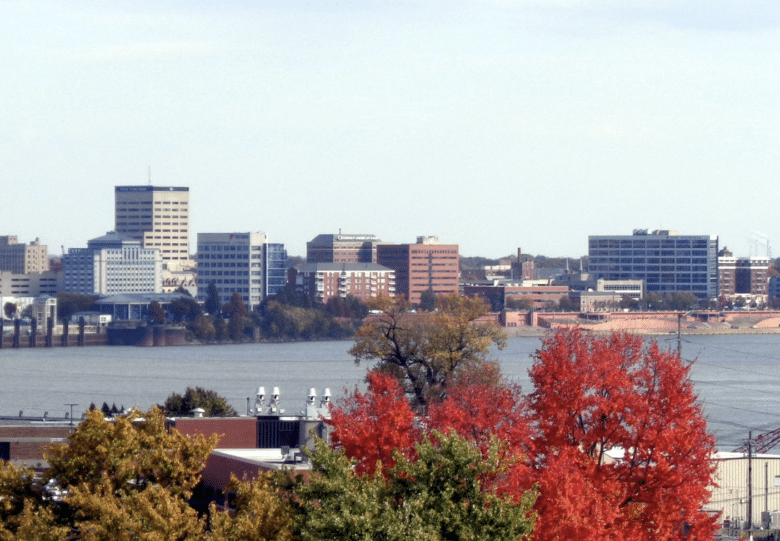
The University of Evansville attracts many young adults to the area, but the city is also a great place to settle down after school. There are several large employers in the area across healthcare, automotive, and education, and there’s an active nightlife to boot.
- Population: 115,749
- Median Household Income: $45,649
- Cost of Living: 92.5% of U.S. average
- Median Rent Price: $925
- Home Price-to-Income Ratio: 4.60
- Average Property Tax: 0.89%
Housing Affordability: Rents are affordable here, but home prices in Evansville are on the higher side when compared to other locations on our list. If you’re looking to buy, you’ll need a salary well above the median household income; the median house price is nearly $210,000.
Image Credit: https://commons.wikimedia.org/wiki/User:Vasiliymeshko.
3. Fort Wayne
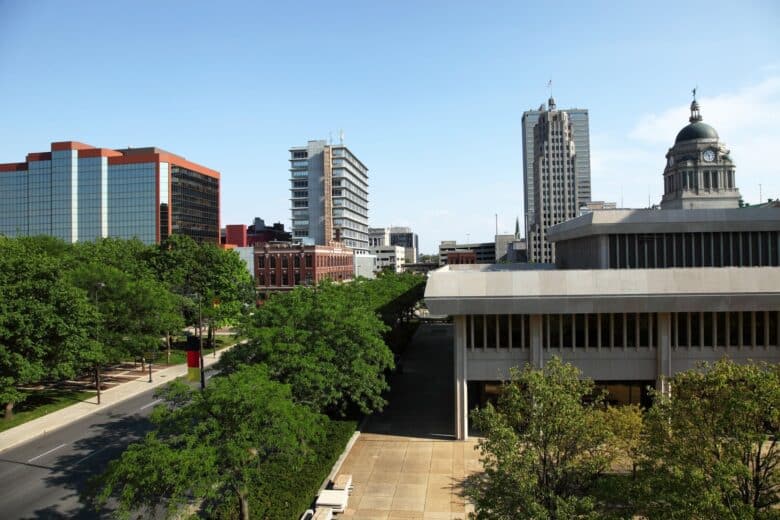
Fort Wayne is the second largest city in Indiana, meaning there are ample job opportunities for young professionals plus plenty of nightlife. You’ll find sports bars, wine and martini bars, comedy clubs, and restaurants — you can even try your hand at axe throwing. Of course, Fort Wayne is also appealing for its abundance of jobs; the major employers in the city include Parkview Health, General Motors, Lutheran Health Network, Streetwater Sound, Lincoln Financial Group, and Amazon.
- Population: 267,927
- Median Household Income: $53,978
- Cost of Living: 89.3% of U.S. average
- Median Rent Price: $1,200
- Home Price-to-Income Ratio: 2.37
- Average Property Tax: 1.01%
Housing Affordability: Young adults who are living on entry-level salaries will find Fort Wayne’s housing market affordable. Though rent can cross the $1,000-per-month line, the home price-to-income ratio of 2.37 is actually quite good. Just because you’re young doesn’t mean it’s too soon to buy a house. Check our guide designed for first-time homebuyers to see what next steps you should take.
Image Credit: DenisTangneyJr/istockphoto.
4. South Bend
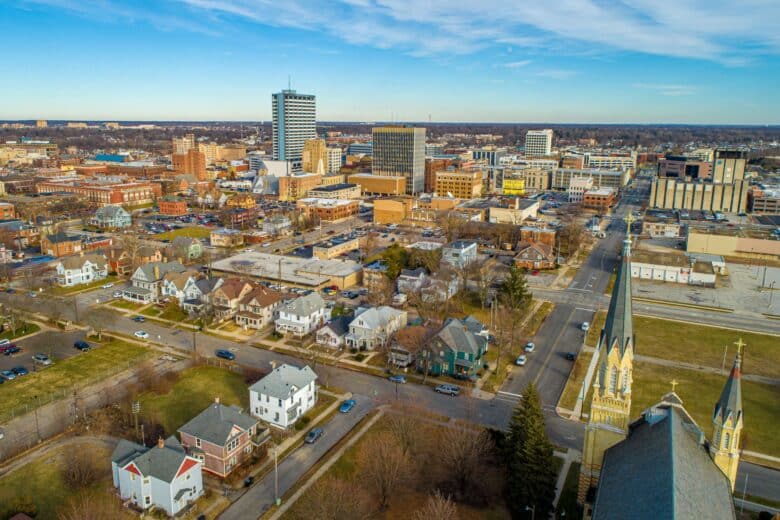
South Bend attracts college hopefuls who bleed blue and gold, but there’s a lot here even if you don’t attend Notre Dame. Over the last decade and a half, as the town was revitalized, unemployment fell; a tech hub now occupies the long-shuttered Studebaker auto plant. Plus, there’s plenty for young adults to do after work hours, with a vibrant downtown teeming with restaurants and bars.
- Population: 103,110
- Median Household Income: $46,002
- Cost of Living: 86.4% of U.S. average
- Median Rent Price: $1,250
- Home Price-to-Income Ratio: 3.88
- Average Property Tax: 1.07%
Housing Affordability: South Bend has a lower-than-average cost of living, but housing costs can be on the higher side for this region. The average home value here is around $170,000 and the median rent price is over $1,200.
Image Credit: Aaron Yoder/istockphoto.
5. Fishers

Fishers is a great spot for young adults: It’s close enough to Indianapolis that you can drive down for a night out in the city, but it’s also near the Geist Reservoir — perfect for young millennials and Gen Zers who like to spend time outdoors.
- Population: 101,966
- Median Household Income: $117,503
- Cost of Living: 92.5% of U.S. average
- Median Rent Price: N/A
- Home Price-to-Income Ratio: 3.38
- Average Property Tax: 1.06%
Housing Affordability: Housing in Fishers is more expensive than it is in downtown, but you’ll enjoy more space, less traffic, and quieter evenings. The median house cost is steep — just a little shy of $400,000. Most people who live here own their home, but one-bedroom apartments here hover around $1,200 per month.
Image Credit: William Reagan/istockphoto.
Best Places to Live in Indiana for Retirees
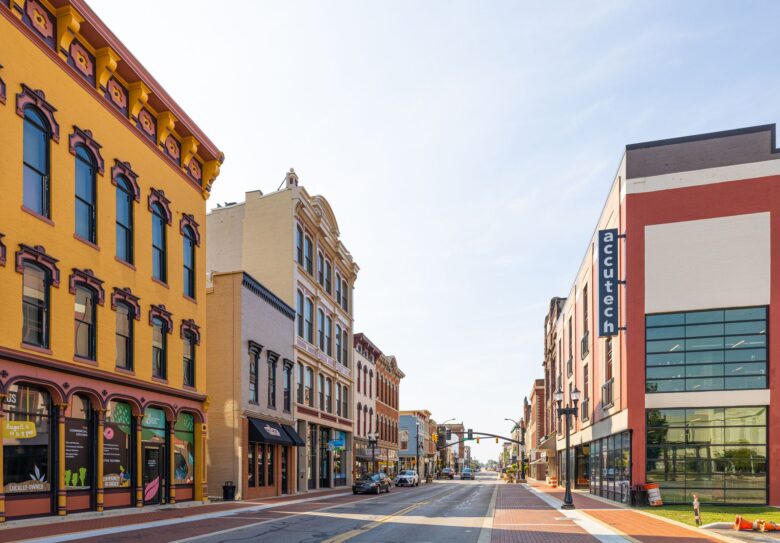
Whether you’re looking for a quiet, affordable place to settle down in retirement, a spot to enjoy the water, a place known for its top-notch healthcare, or simply a location that affords you easy access to your grandkids by plane or car, Indiana is full of great spots for retirees.
1. Muncie
In 2022, a Census Data Report named Muncie the third best place to retire in America. And it’s easy to see why: The cost of living is lower than the national average, there are plenty of parks and trails to enjoy, and Muncie offers a healthy downtown with plenty of ways for seniors to get involved in the community. Muncie is also not far from Indianapolis; retirees with kids and grandkids there can easily visit their family without having to be near the big city.
- Population: 65,076
- Median Household Income: $36,661
- Cost of Living: 91.3% of U.S. average
- Median Rent Price: $850
- Home Price-to-Income Ratio: 3.53
- Average Property Tax: 0.87%
Housing Affordability: Rent costs in Muncie are manageable, but retirees who plan to own a home in the city might find the costs a little more challenging, especially on a fixed retirement budget. The home price-to-income ratio is 3.53. There are several retirement communities here, as well as assisted living communities for those who need more care.
Image Credit: Roberto Galan/istockphoto.
2. Michigan City

You read that right: Michigan City is in Indiana. And it offers entertainment for retirees with any interests — a botanic garden for outdoorsy types, a casino, historic sites, plus the Lake Michigan lakefront (which is why it’s also on our list of best affordable cities near the water).
- Population: 31,792
- Median Household Income: $47,197
- Cost of Living: 81.6% of U.S. average
- Median Rent Price: $1,075
- Home Price-to-Income Ratio: 11.38
- Average Property Tax: 0.95%
Housing Affordability: Renting here is relatively affordable, and there are several retirement communities and assisted-living spots. A home that isn’t on the waterfront will be the most affordable choice here, and fortunately there are lots of ranch-style homes available, ideal for seniors who don’t want to climb stairs. Visit a home loan help center if you’re thinking about making a purchase in Michigan City.
Image Credit: Nicholas Klein/istockphoto.
3. Santa Claus

Imagine how eager your grandchildren would be to visit when they hear you live in a town called Santa Claus. There’s plenty to enjoy in retirement here — even without the long, white beard. Santa Claus is also neatly sandwiched between Louisville, St. Louis, and Indianapolis, giving you plenty of fun day trips to take whenever you’re up for some adventure.
- Population: 2,586
- Median Household Income: $89,318
- Cost of Living: 78% of U.S. average
- Median Rent Price: $2,600
- Home Price-to-Income Ratio: 3.67
- Average Property Tax: 0.66%
Housing Affordability: Housing can be costly in Santa Claus; the home price-to-income ratio is 3.67. That said, Santa Claus has a remarkably low cost of living (just 78% of the U.S. average).
Image Credit: Santa Claus by Sarah Afshar (CC BY-SA).
4. South Bend
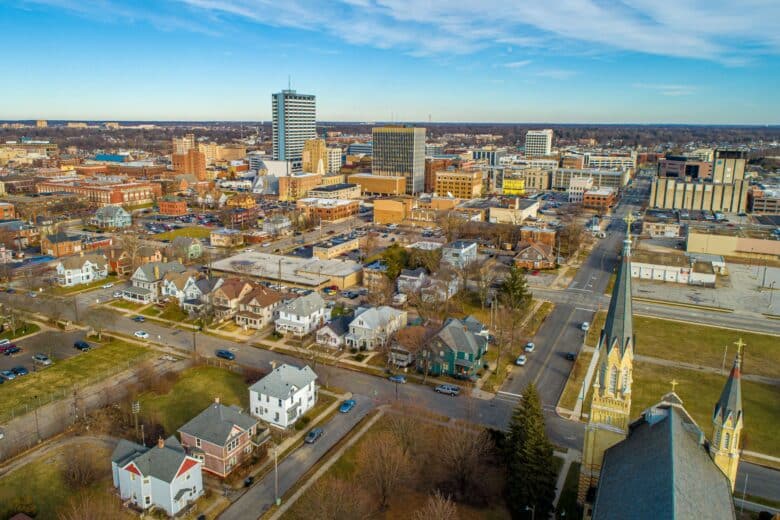
At the start of the century, South Bend was a dying town, once renowned for automotive manufacturing but left behind by the tech revolution. Major revitalization has made the town attractive once again. Retirees can enjoy a pedestrian-friendly downtown, new housing, and a short drive to Lake Michigan for a day on the water. South Bend also has its own airport, making it easy to travel in retirement — or just hop on a plane to visit the grandkids.
- Population: 103,110
- Median Household Income: $46,002
- Cost of Living: 86.4% of U.S. average
- Median Rent Price: $1,250
- Home Price-to-Income Ratio: 3.88
- Average Property Tax: 1.07%
Housing Affordability: Retirees on a fixed income will find average home values in South Bend that are only half of the national average. There is also an abundance of retirement communities here.
Image Credit: Aaron Yoder/istockphoto.
5. Carmel
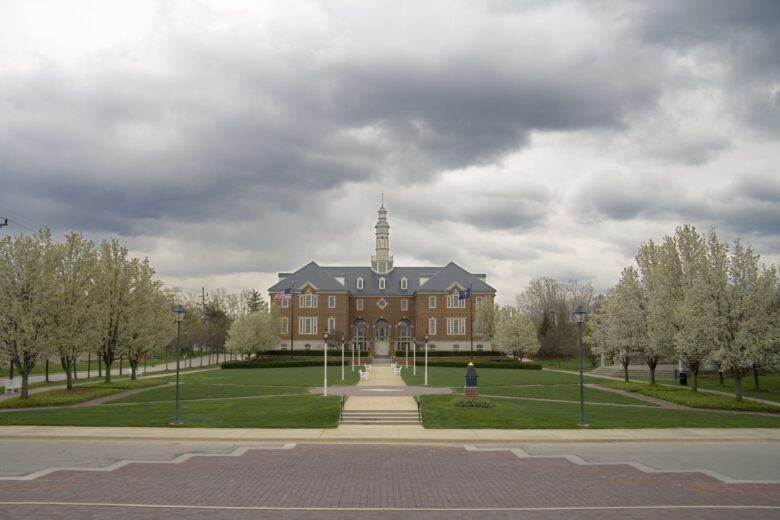
Carmel is a vibrant suburban city north of Indianapolis. You can enjoy the city when you need it, but otherwise, you’ll find things much quieter and more peaceful in Carmel. There are plenty of community organizations for retirees to get involved with here, and it’s not far from Indiana University Health Medical Center, a top-rated hospital in the country.
- Population: 101,964
- Median Household Income: $119,772
- Cost of Living: 92.5% of U.S. average
- Median Rent Price: $2,308
- Home Price-to-Income Ratio: 1.13
- Average Property Tax: 1.06%
Housing Affordability: Carmel has a notably low home price-to-income ratio, so you should be able to find a nice home to spend your retirement in. Has it been a while since you’ve bought a house? Review our guide to mortgage prequalification vs. preapproval before looking for a lender for your new home in Carmel.
Image Credit: alexeys/istockphoto.
1. Michigan City
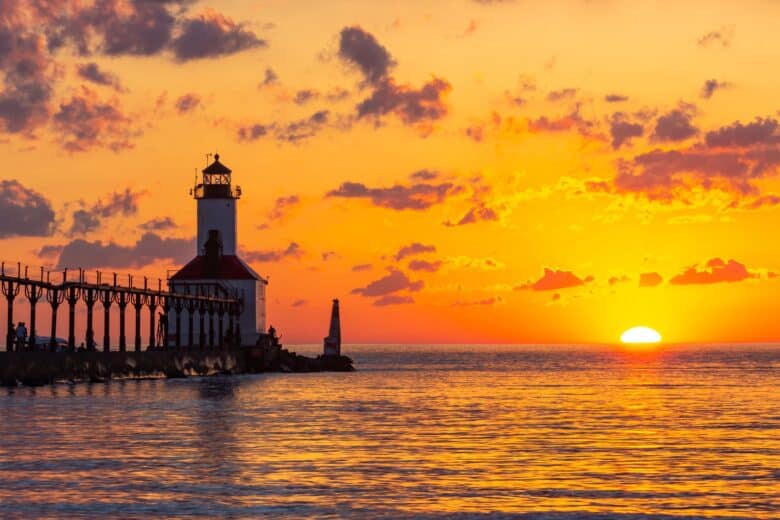
The best lake town in Indiana shares a name with the state’s nearby neighbor. This waterfront city offers stunning views of Lake Michigan and is ideal for boaters. But there’s more to do than just get out on the water; in Michigan City, you might ride your bike along stunning trails, take a trip to Indiana Dunes National Park, check out the botanical gardens, or grab a glass of regional wine at Shady Creek Winery.
- Population: 31,792
- Median Household Income: $47,197
- Cost of Living: 81.6% of U.S. average
- Median Rent Price: $1,075
- Home Price-to-Income Ratio: 11.38
- Average Property Tax: 0.95%
Housing Affordability: Lakefront properties have significantly driven up the home price-to-income ratio. If you expect a home with a view, you’ll pay big time in Michigan City. As you move farther south of the beach, however, property becomes more affordable.
Image Credit: Focqus, LLC/istockphoto.
2. Gary
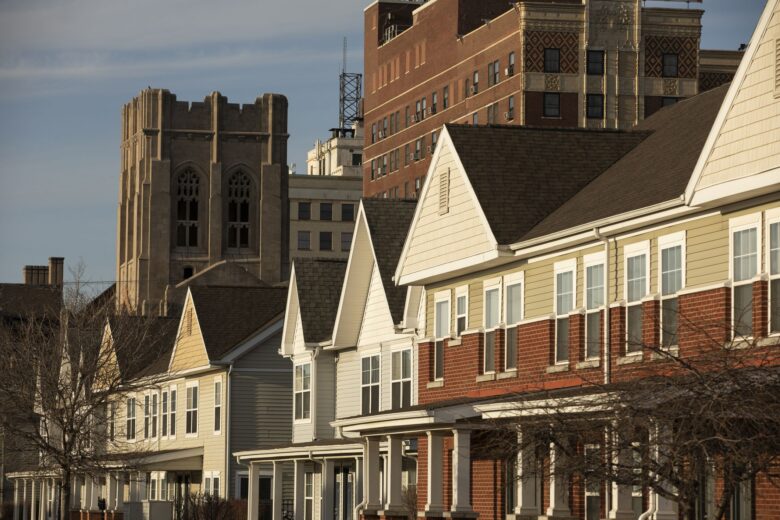
Gary doesn’t offer views of the lake like Michigan City does, but it’s not far at all from Lake Michigan and the Miller Beach area has relatively pristine lake frontage and Indiana Dunes National Park is nearby. If you love boating but want to live somewhere slightly more affordable, Gary could be the perfect spot. Its proximity to Chicago (half an hour by car when the traffic is light) is a nice bonus.
- Population: 67,972
- Median Household Income: $34,085
- Cost of Living: 87.3% of U.S. average
- Median Rent Price: $1,100
- Home Price-to-Income Ratio: 3.44
- Average Property Tax: 1.18%
Housing Affordability: Rent in Gary is relatively affordable at $1,100. The average value of a home here is $70,500, one of the lowest on our list. Homes in the Miller Beach and Aetna neighborhoods, minutes from the waterfront, are priced from $150,000-$270,000, well below the national average of $348,539, and if you are open to a fixer-upper, you can find a property for far less.
Image Credit: MattGush/istockphoto.
3. Indianapolis
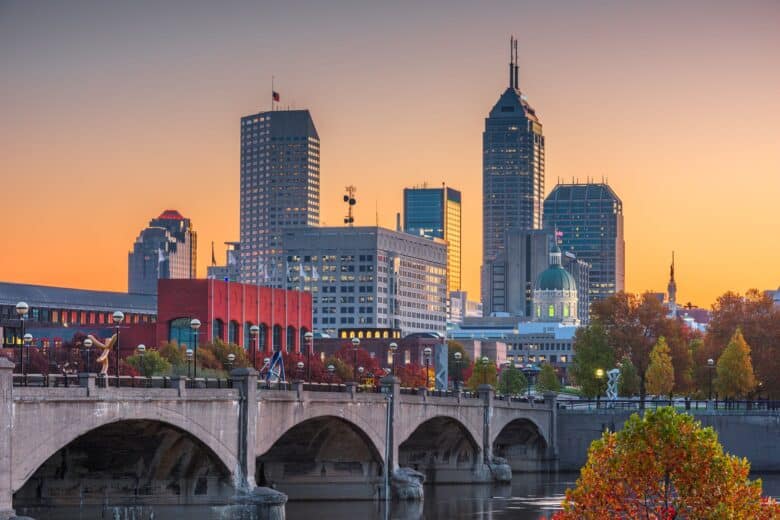
It’s no Venice, but Indianapolis has its own canals that make this U.S. capital unique. On a sunny afternoon, you can rent a boat or take your kayak out on the water and explore the city from a unique vantage point.
- Population: 880,621
- Median Household Income: $54,321
- Cost of Living: 92.5% of U.S. average
- Median Rent Price: $1,375
- Home Price-to-Income Ratio: 4
- Average Property Tax: 1.06%
Housing Affordability: Indianapolis is an affordable place to live, as far as big cities go. Rent in particular is impressive; the median cost is just $1,375. With average home values around $218,000, Indianapolis is that rare big city where it is possible to purchase a home at a relatively reasonable price. If you own in Indianapolis and are thinking about staying put, you might get lower payments if you consider a mortgage refinance.
Image Credit: Sean Pavone/istockphoto.
4. Fishers

Fishers is far south of Lake Michigan, but avid boaters, kayakers, and, well, fishers will find plenty of water activities here. The city butts up against the Geist Reservoir, which offers ample opportunities to get out on the water and enjoy the sunshine.
- Population: 101,966
- Median Household Income: $117,503
- Cost of Living: 92.5% of U.S. average
- Median Rent Price: $1,950
- Home Price-to-Income Ratio: 3.38
- Average Property Tax: 1.06%
Housing Affordability: The average rent price in Fishers is $1,950, but if you like to spend time out on the water, you may be looking to buy a home so you have somewhere to park your boat or store your kayaks. Buying a house near the water could be pricey, but if you’re open to living elsewhere in Fishers, prices start in the mid-$200,000 range.
Image Credit: William Reagan/istockphoto.
5. Whiting
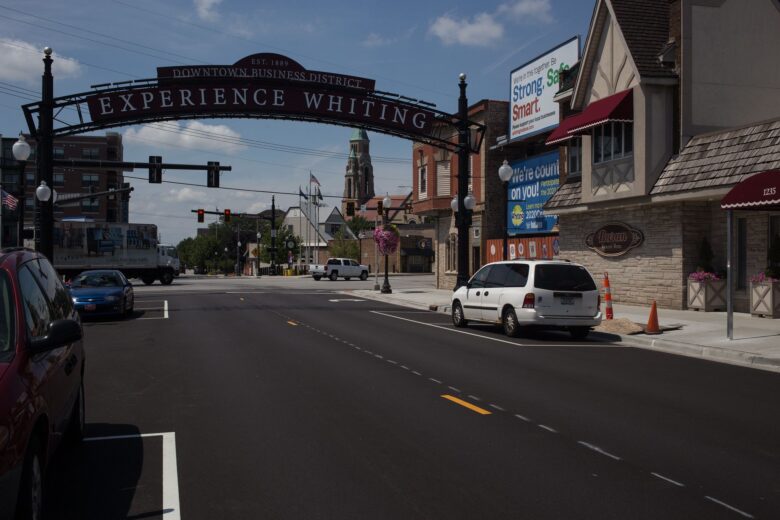
Whiting is on the coast of Lake Michigan, offering sweeping views of the water. But it’s also bordered by Wolf Lake, which is worth exploring as well. Whiting is much smaller than the other towns on this list; if you’re looking for something quiet, Whiting could be just the spot.
- Population: 4,571
- Median Household Income: $50,590
- Cost of Living: 87.3% of U.S. average
- Median Rent Price: $1,200
- Home Price-to-Income Ratio: 5.19
- Average Property Tax: 1.18%
Housing Affordability: Rent in Whiting is reasonable, at a median price of $1,200. As in Michigan City, lakefront properties tend to drive up the home price-to-income ratio in Whiting, but if you’re game to live inland you’ll find housing affordable.
Image Credit: Whiting by Paul Sableman (CC BY).
The Takeaway
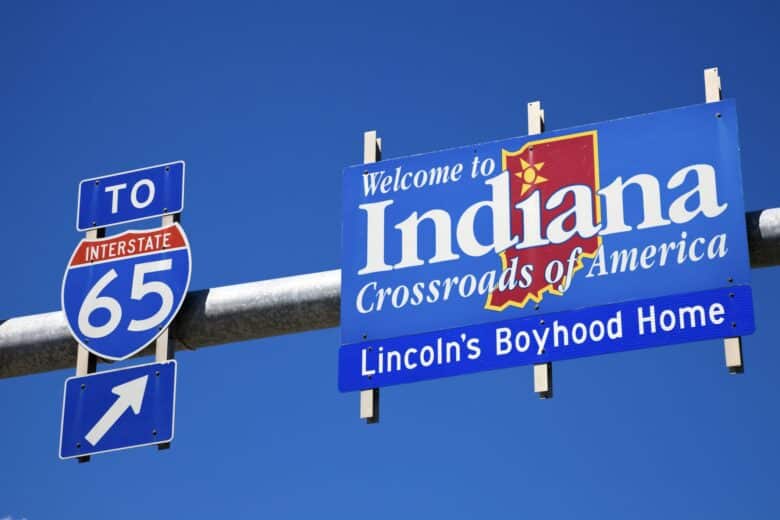
Ready to move to or within Indiana? The Hoosier State is full of great places to live; it’s just a matter of weighing your wants, needs, and budget. The good news is that housing markets are cool in many of the cities on this list. So you can spend some time exploring the best areas for you.
This article originally appeared on SoFi.com and was syndicated by MediaFeed.org.
*SoFi requires Private Mortgage Insurance (PMI) for conforming home loans with a loan-to-value (LTV) ratio greater than 80%. As little as 3% down payments are for qualifying first-time homebuyers only. 5% minimum applies to other borrowers. Other loan types may require different fees or insurance (e.g., VA funding fee, FHA Mortgage Insurance Premiums, etc.). Loan requirements may vary depending on your down payment amount, and minimum down payment varies by loan type.
+Lock and Look program: Terms and conditions apply. Applies to conventional purchase loans only. Rate will lock for 91 calendar days at the time of preapproval. An executed purchase contract is required within 60 days of your initial rate lock. If current market pricing improves by 0.25 percentage points or more from the original locked rate, you may request your loan officer to review your loan application to determine if you qualify for a one-time float down. SoFi reserves the right to change or terminate this offer at any time with or without notice to you.
¹FHA loans are subject to unique terms and conditions established by FHA and SoFi. Ask your SoFi loan officer for details about eligibility, documentation, and other requirements. FHA loans require an Upfront Mortgage Insurance Premium (UFMIP), which may be financed or paid at closing, in addition to monthly Mortgage Insurance Premiums (MIP). Maximum loan amounts vary by county. The minimum FHA mortgage down payment is 3.5% for those who qualify financially for a primary purchase. SoFi is not affiliated with any government agency.
SoFi Loan Products
SoFi loans are originated by SoFi Bank, N.A., NMLS #696891 (Member FDIC). For additional product-specific legal and licensing information, see SoFi. Equal Housing Lender.
SoFi Mortgages
Terms, conditions, and state restrictions apply. Not all products are available in all states. See SoFi for more information.
Financial Tips & Strategies: The tips provided on this website are of a general nature and do not take into account your specific objectives, financial situation, and needs. You should always consider their appropriateness given your own circumstances.
Third-Party Brand Mentions: No brands, products, or companies mentioned are affiliated with SoFi, nor do they endorse or sponsor this article. Third-party trademarks referenced herein are property of their respective owners.
Image Credit: benkrut/istockphoto.
More from MediaFeed

How much credit card debt did Americans start the holiday season with?
Image Credit: bernie_photo/istockphoto.