
Only a true child of the ’50s remembers these 10 household rules
Every decade runs its households a little differently, but the 1950s operated on a level of formality that’s genuinely hard to picture now. Etiquette wasn’t a suggestion. It was structure, and kids were expected to know it cold.
Writers documenting the era have compiled these rules from firsthand family accounts and vintage etiquette guides, and the same handful keep surfacing no matter which household is being described. Ten rules that shaped daily life for a kid growing up in the decade.

Stand up when an adult entered the room
Kids leaped to their feet the moment a grown-up walked in, parents exempted. Staying seated risked a reprimand on the spot, and the rule applied just as strictly to teachers and family friends as it did to relatives.
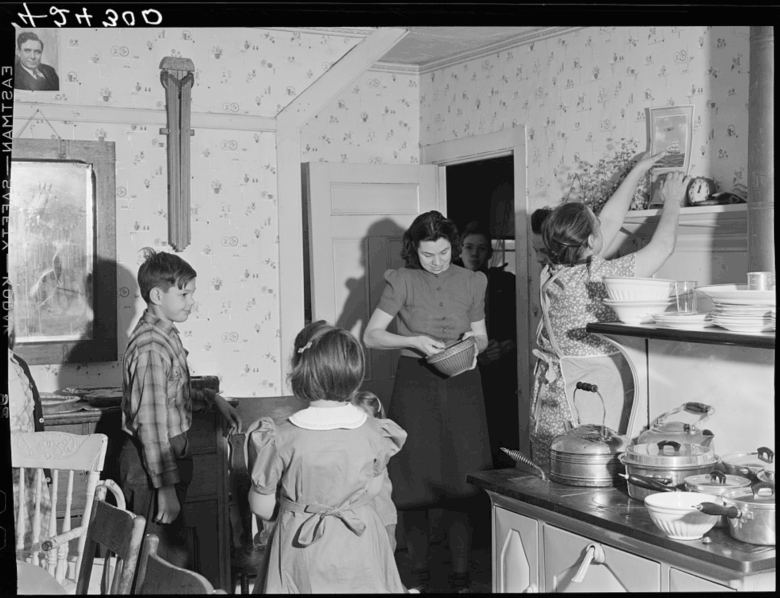
Dinner was ready the moment Dad walked through the door
Timing the meal to the head of household’s arrival wasn’t a courtesy. It was expected, and a late dinner reflected poorly on the whole household, not just whoever was cooking.

Elbows off the table, full stop
Resting an elbow on the table during a meal read as laziness, or worse, poor breeding entirely. Posture mattered just as much, with slouching corrected on sight.

Stay seated until everyone finished eating
Clearing your plate early bought no early exit. Dinner was a group activity start to finish, and leaving the table before the family was done was its own kind of rude.

Home before the streetlights turned on
The unofficial curfew of an entire generation. No watches needed, no check-ins required, just a porch light flickering on somewhere as the signal to head back.

Chores before play, no negotiation
Sweeping, dishes, folding laundry, whatever needed doing got done first. There was no allowance chart attached to it either. It was simply part of living in the house, expected of every child regardless of age.

“Yes ma’am” and “yes sir,” always
Responding to an adult’s instruction with anything other than formal agreement was counted as defiance. Even a mild protest could be read as talking back, and talking back had consequences.

Thank-you notes within 48 hours
A birthday gift or holiday package triggered a strict clock. Etiquette manuals of the era demanded a handwritten response be mailed within two days, or risk being considered deeply ungrateful.

No loud appliances after a certain hour
Vacuuming or running the washing machine in the evening disrupted the household’s quiet time. Noisy chores were pushed to earlier in the day, preserving calm evening hours for conversation and rest.

Dating meant meeting the whole family first
A boy interested in a girl didn’t just have to impress her. He had to impress her parents, often over a formal introduction, with an early curfew set in advance and rarely any privacy involved.

The bottom line
None of these rules were optional, and none came with much explanation beyond “because I said so.” That structure produced a very particular kind of childhood, one built almost entirely around knowing exactly where you stood, and standing there properly.
Ask us! What questions do you have about content, strategy, pop culture, lifestyle, wellness, history or more? We may use your question in an upcoming article!
Related:
- Nostalgic gold: 1980s cartoons worth rewatching as an adult
- Fun things we could do in the ’80s that today’s kids just can’t
Like MediaFeed’s content? Be sure to follow us.
This article was syndicated by MediaFeed.co.