’80s car features that seemed futuristic but weren’t
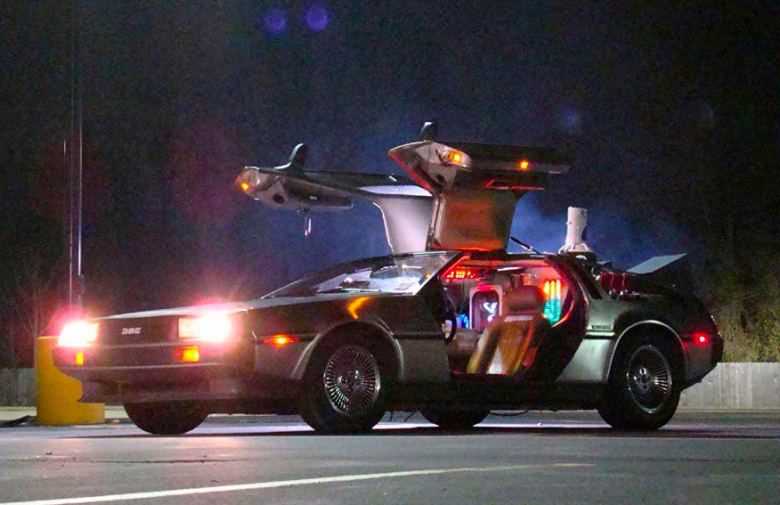
Back to the Future has a lot to answer for. One time-traveling DeLorean convinced an entire decade the future had already arrived, and manufacturers spent the 1980s bolting anything vaguely space-age onto a dashboard whether the technology behind it was finished or not.
The instinct wasn’t wrong, exactly. Digital displays, touchscreens, cars that talked back, all of it eventually became completely normal decades later. What the 1980s actually had was the idea arriving a solid twenty years before the engineering could support it, which produced some of the most ambitious dashboards ever built alongside some of the least reliable.
Five of those features below.
Buick’s Graphic Control Center touchscreen
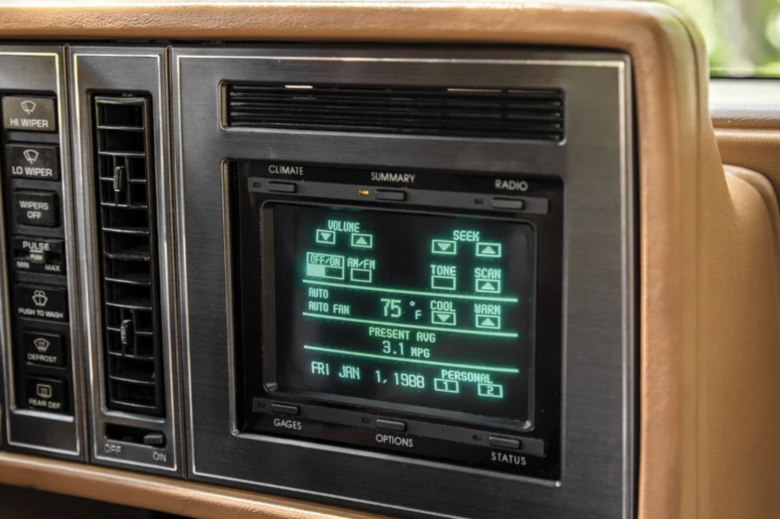
That’s the touchscreen Buick shipped in the 1986 Riviera, controlling climate, radio, and trip data before touchscreens existed in any production car. A genuine world-first. It was also a cathode-ray tube under a Mylar switch panel that needed several seconds just to warm up, unreliable enough that Buick killed it by 1990. Replacement units are nearly impossible to find today.
Digital instrument clusters on the Corvette and Trans Am
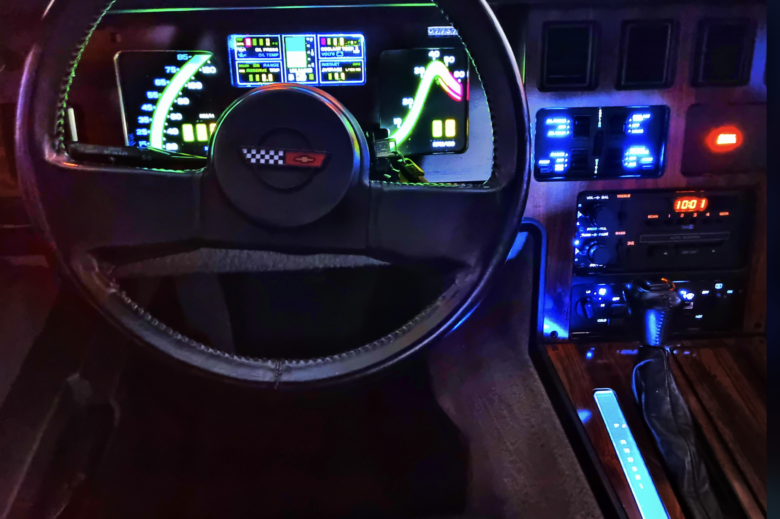
Green numbers. Red numbers. A Tron-style glow across the Corvette, the Trans Am, dozens of other dashboards through the decade. Bright sunlight charred the polarizing film GM laid over the readouts, and the circuit board connections underneath corroded with age, failing often enough that plenty of owners eventually swapped back to analog gauges out of pure frustration.
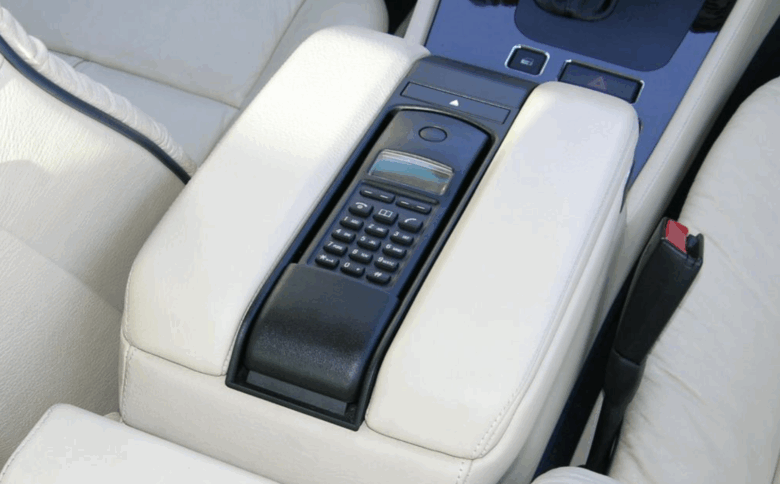
The car phone
Wired permanently into the dashboard, the technology traced back to 1940s Bell system radiotelephones. Even by the 1980s it remained rare, expensive, and genuinely impractical. Overloaded channels and coverage gaps could drop a call the moment a car left a major city.
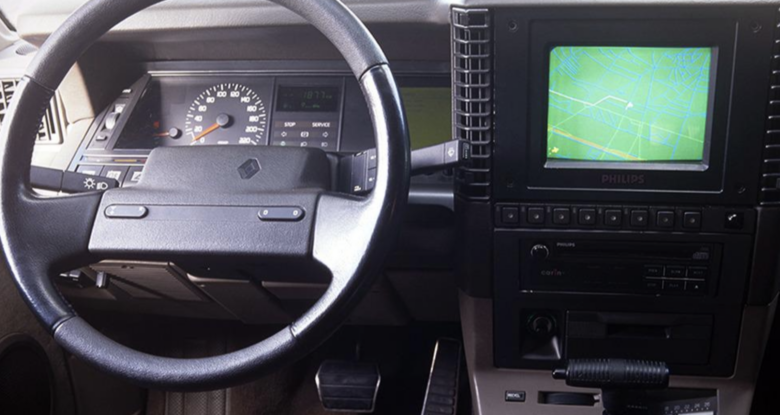
The Renault 25 and Austin Maestro’s talking dashboards
The Renault 25 announced a door left ajar. So did the Austin Maestro, built around entire ad campaigns selling the novelty of a car with a voice. Underneath the gimmick sat a fixed set of canned warnings. No actual intelligence behind any of it, closer to a smoke detector than a co-pilot.
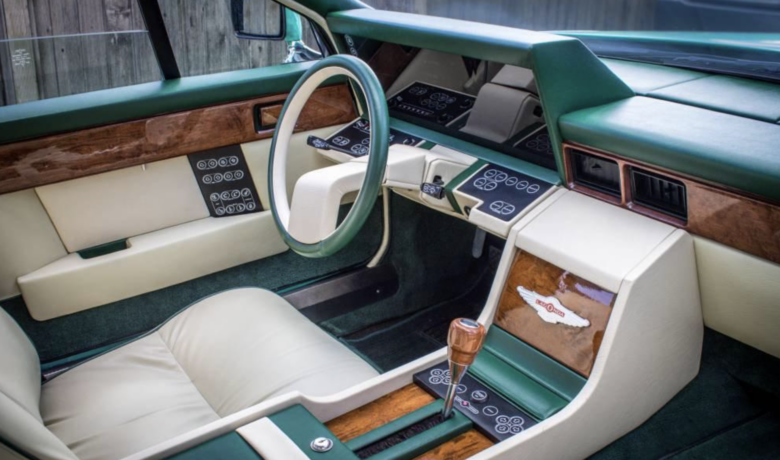
Aston Martin Lagonda’s digital dashboard
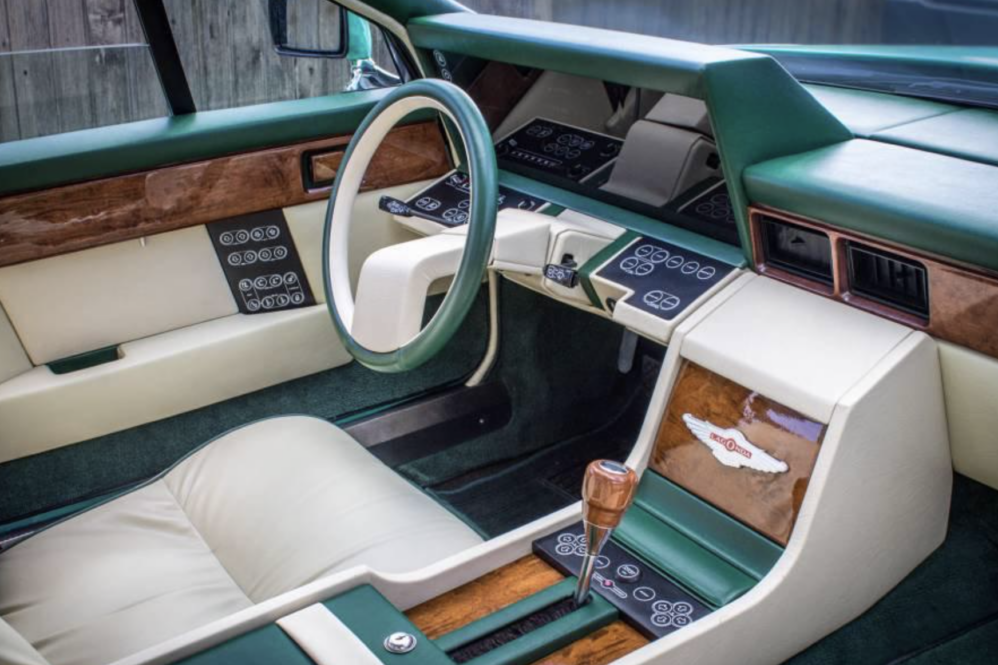
Aston Martin went well past a digital speedometer here, replacing the whole instrument panel with touch panels and green matrix displays years ahead of any competitor. The onboard computer came from an American defense contractor running technology barely out of the 1970s. Components sourced for the system failed regularly, and keeping a Lagonda’s dashboard working became its own specialized hobby among owners.
The bottom line
Every feature here eventually became standard equipment, decades later, once the technology actually caught up to the ambition. In the 1980s, it was all a trailer for a movie that wasn’t finished being made yet.
Ask us! What questions do you have about content, strategy, pop culture, lifestyle, wellness, history or more? We may use your question in an upcoming article!
Related:
Like MediaFeed’s content? Be sure to follow us.
This article was syndicated by MediaFeed.co.