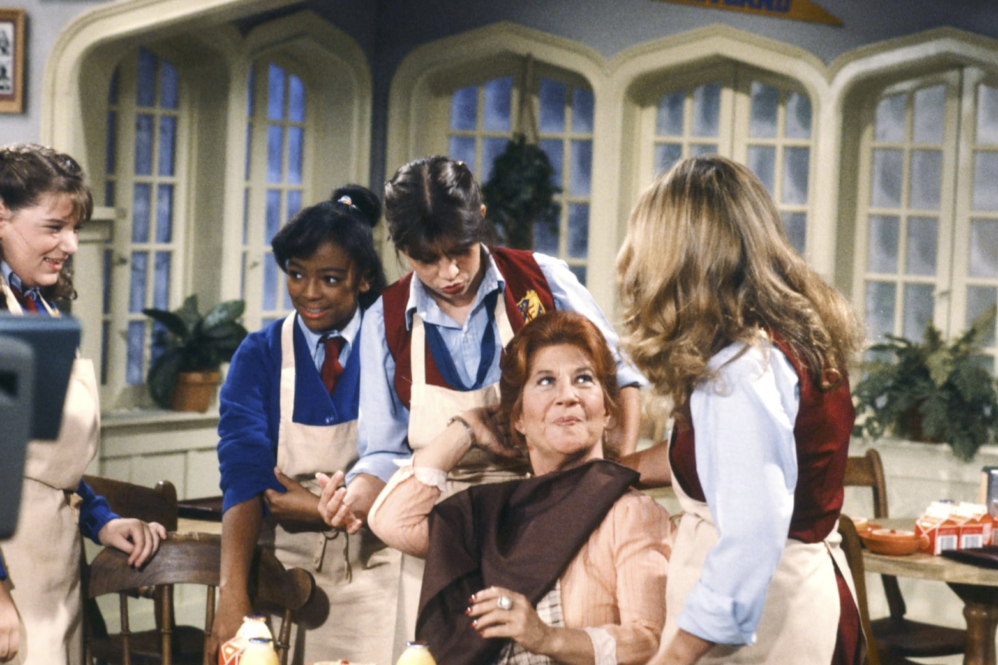
’80s sitcom theme songs you still can’t get out of your head decades later
The brain does not forget a theme song it heard 400 times before the age of 15. That is not nostalgia, but rather a neurological fact. The 1980s sitcom theme was a specific and extraordinarily effective delivery mechanism for a feeling; an emotional proposition repeated until it became permanent. These are the ones that never left.
The sourcing here comes from Rolling Stone’s list of the greatest TV theme songs and Mental Floss’s Diff’rent Strokes facts.
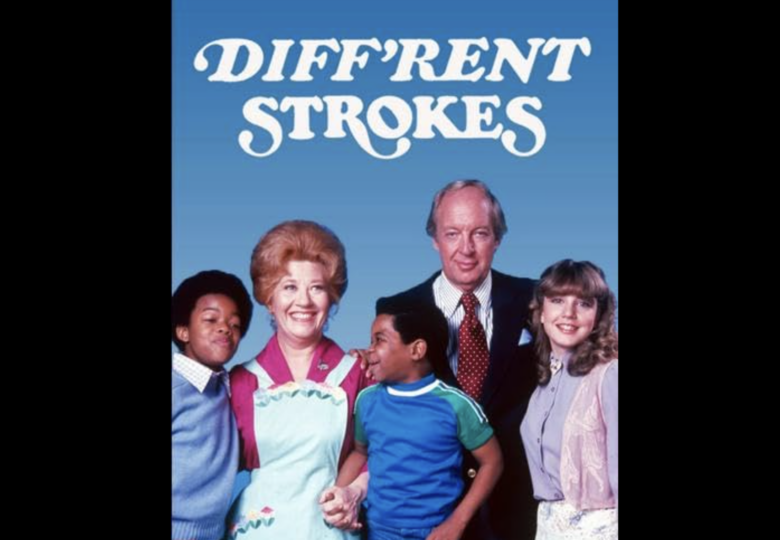
“Diff’rent Strokes” — Diff’rent Strokes (1978–1986)
The man who wrote it also wrote the Facts of Life theme and co-composed the Growing Pains theme. Alan Thicke spent a significant portion of the 1980s writing the songs that would colonize a generation’s memory. Mental Floss states that Thicke sang on and co-wrote the music and lyrics, making it one of the few sitcom themes that both named the show and explained its premise. “Now the world don’t move to the beat of just one drum.” Impossible to hear that opening and not know exactly where you are in time.
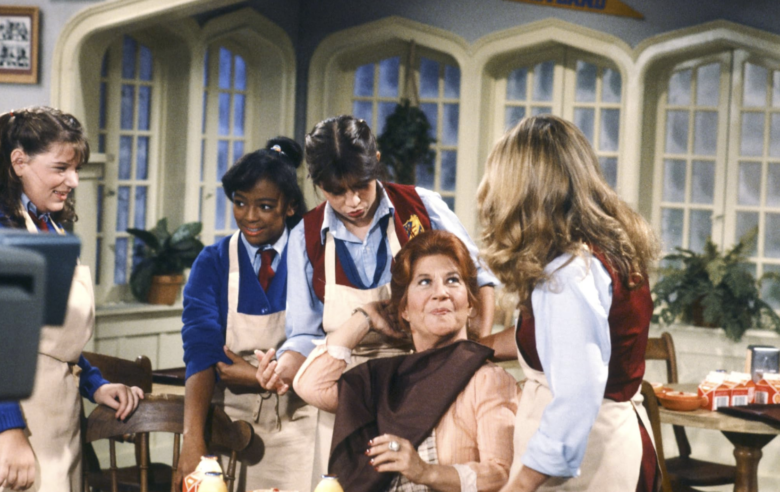
“You Take the Good, You Take the Bad” — The Facts of Life (1979–1988)
Also written by Alan Thicke, which means he was responsible for the earworms of at least three different households watching different channels on different nights. Rolling Stone documents the Facts of Life theme as one of the most precisely matched in sitcom history — a song that describes exactly what the show is about, delivered with enough melodic stickiness to survive forty years without losing its grip. Nobody has ever improved on that as a summary of adolescence.
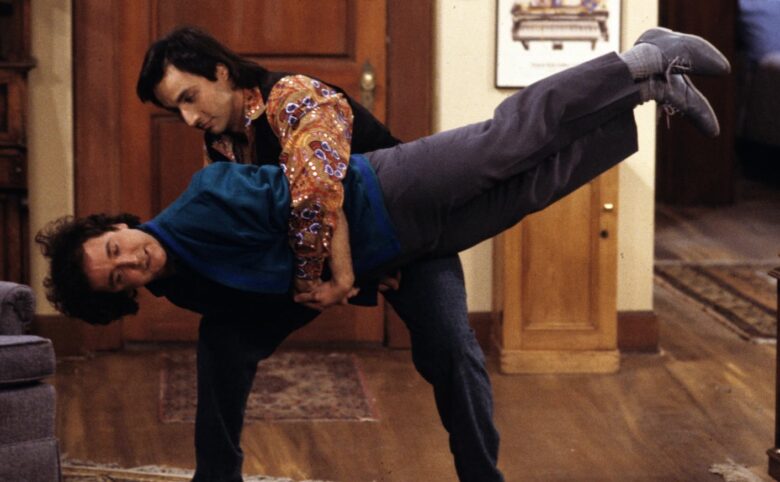
“Stand Tall” — Perfect Strangers (1986–1993)
Jesse Frederick and Bennett Salvay wrote the Perfect Strangers theme and then wrote essentially the same emotional proposition for Family Matters, Step by Step and Full House. Rolling Stone says that they felt like part of the same musical tapestry. Perfect Strangers was the first. “Standing tall, on the wings of my dream.” Frederick sang it himself. The optimism is so total and so unironic that it feels, forty years later, like a document from an entirely different emotional era.
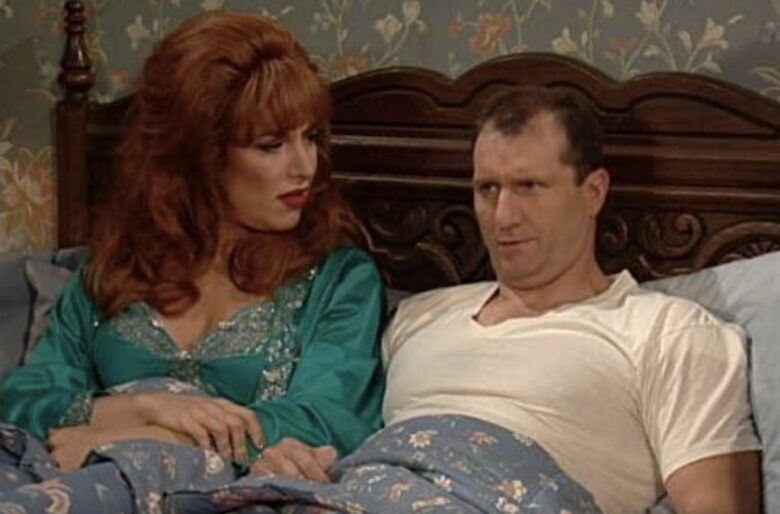
“Love and Marriage” — Married With Children (1987–1997)
Frank Sinatra recorded this in 1955 and won an Emmy for it. Thirty-two years later, the producers of Married With Children used it as the theme for a show that was the precise satirical inverse of everything the song claimed about domestic life. Rolling Stone notes the dissonance was completely intentional — Sinatra’s warmth playing against Al Bundy’s permanent misery was the joke, running every week before a single line of dialogue.
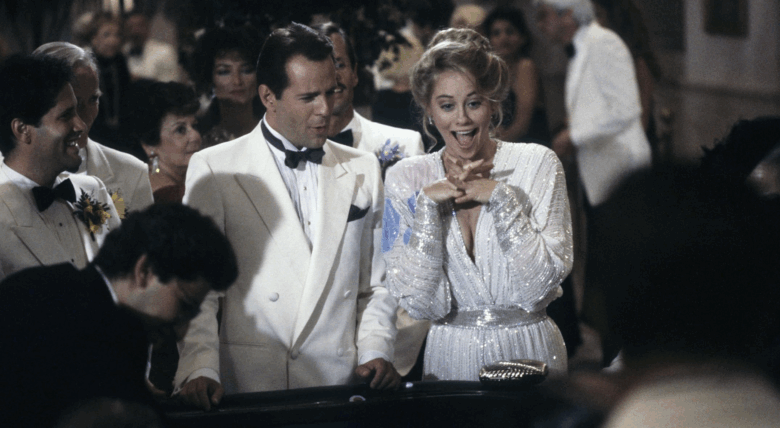
“Moonlighting” — Moonlighting (1985–1989)
Al Jarreau wrote and performed it, co-wrote it with Lee Holdridge, and Nile Rodgers produced it; it reached the Billboard top 30 as a standalone single — one of the few TV themes to chart on its own merits. Rolling Stone describes it as the perfect smooth jazz complement to one of the best shows of the decade. Jarreau is serenading a generation of adults watching Cybill Shepherd and Bruce Willis fall in love on a Wednesday night and feeling something they couldn’t quite name. The theme named it for them.

“Night Court” — Night Court (1984–1992)
An instrumental. No lyrics. A jazz-funk theme written by Jack Elliott that announced itself in the first four bars as something completely different from everything else in the 1984 television landscape. Rolling Stone’s documentation notes it as one of the most distinctive instrumental themes in sitcom history; a piece of music that told you exactly what kind of show you were about to watch before a single character appeared. Quirky, fast, slightly absurd. The show ran for nine seasons. The theme never needed a word.

The bottom line
The theme songs that survived the 1980s did not survive because the shows were great. Several of the shows were not particularly great. They survived because they arrived at the exact moment when a person’s musical memory was being formed, repeated until the neural pathway was structural, and then stayed. That is not craft. That is timing. But the craft is what made the timing work.
Ask us! What questions do you have about content, strategy, pop culture, lifestyle, wellness, history or more? We may use your question in an upcoming article!
Related:
- 10 classic arcades every ’80s and ’90s kid remembers
- 15 cartoons from the 80s Gen X still has memorized
Like MediaFeed’s content? Be sure to follow us.
This article was syndicated by MediaFeed.co.